
Avoiding Parabens in Daily Skincare: A 2026 Guide
by Ian Gabbidon on Oct 19, 2026

Table of Contents
- Why Avoiding Parabens in Daily Skincare Matters
- What Parabens Are and How They Preserve Products
- The Evidence on Parabens and Hormonal Effects
- Breast Cancer Claims and the Limits of the Evidence
- Regulatory Assessments and Permitted Concentration Levels
- How to Identify Parabens on Ingredient Labels
- Parabens and Sensitive Skin: What to Know
- Alternatives to Parabens in Cosmetics
- Building a Paraben-Free Daily Skincare Routine
- Product Storage, Contamination and Expiry
- Who May Have a Specific Reason to Avoid Parabens
- Common Mistakes When Avoiding Parabens
- Conclusion
- Frequently Asked Questions
Last Updated: October 20, 2026
Why Avoiding Parabens in Daily Skincare Matters
Avoiding parabens in daily skincare has become one of the most common requests we hear at Iuvo Skincare, and it is worth understanding why before you clear out your bathroom shelf. Parabens are preservatives used to stop bacteria, mould and fungi growing in water-based cosmetics and personal care products.
The concern that drives avoiding parabens in daily skincare is less about any single product and more about cumulative exposure. Most people apply several products each morning and evening, every day, for decades. Each of those products may contain a preservative system, and the question is whether the total load matters.
This guide examines what parabens actually do, what the scientific evidence does and does not show, how regulators assess them, and how to read a label properly.
What Parabens Are and How They Preserve Products
Parabens are a family of synthetic esters of para-hydroxybenzoic acid, used as antimicrobial preservatives in cosmetics, toiletries and some foods. They work by interfering with the ability of bacteria and fungi to reproduce, which extends shelf life and protects the product from microbial contamination during normal use.
The compound was first adopted commercially in the mid-twentieth century and became near-universal because it is cheap, effective, water-soluble and stable across a wide pH range. A formulation chemist choosing a preservation system wants broad-spectrum activity against bacteria, yeast and mould, low irritation potential, and compatibility with the rest of the formula. Parabens deliver on most of those counts, which is precisely why they became so widespread.
Common Paraben Types and Ingredient Names
The paraben family is larger than most shoppers realise. On an ingredient list, look for the suffix "-paraben," which appears in the INCI naming system used across cosmetics labelling.
- Methylparaben - the most common, typically used against fungi
- Ethylparaben - often paired with methylparaben
- Propylparaben - stronger against bacteria, frequently combined with methylparaben
- Butylparaben - longer chain, more potent antimicrobial action
- Isobutylparaben, isopropylparaben, benzylparaben and heptylparaben - less common variants that also fall within the family
Combinations are standard practice because different chain lengths target different organisms. A single product may list two or three of these together, which is why a quick scan of the first few ingredients can miss them.
How Parabens Prevent Bacteria, Mould and Fungi
Microbial contamination is not a theoretical risk. Any product containing water, and any product applied with fingers to skin, can pick up organisms from the air, the hands, or the bathroom shelf. Once established, bacteria and mould can cause visible spoilage, unpleasant odour, and in the worst cases skin infections, particularly if the product is applied near the eyes or to broken skin.
Parabens interrupt microbial cell function, preventing the organisms from multiplying and therefore preventing the contamination from reaching a level that harms the product or the user. This is why preservative systems are described as protective rather than cosmetic: they are there to keep the formulation safe across its stated shelf life and period after opening.
The Evidence on Parabens and Hormonal Effects
Parabens can mimic oestrogen weakly in laboratory settings, and this is the finding that underpins most of the concern about them. In in-vitro studies, certain parabens have been shown to bind to oestrogen receptors and produce a modest oestrogenic response. That observation is real and has been replicated.
What matters is dose and route. The oestrogenic activity measured in cell cultures is orders of magnitude weaker than the body's own oestrogen, and the amounts that penetrate intact human skin from a cosmetic product are small. Regulators assess these compounds on the basis of estimated systemic exposure from real use, not on laboratory concentrations.
Many researchers and dermatologists describe the evidence as showing plausible endocrine activity at a mechanistic level, without demonstrating hormonal effects in humans at typical cosmetic exposure. That distinction is important. A finding in a petri dish is a signal worth investigating, not proof of harm in daily life.
Breast Cancer Claims and the Limits of the Evidence
The claim that parabens cause breast cancer circulates widely, and it deserves careful handling because it affects real people making real decisions. The origin of the concern is a body of research that detected parabens in samples of breast tumour tissue. Finding a substance in tumour tissue is not the same as showing that the substance caused the tumour.
Several limitations apply to that research. The studies were small, they did not establish how the parabens arrived in the tissue or whether they came from cosmetics at all, and they did not compare tumour tissue against control tissue in a way that would establish causation.
The current position among major scientific and regulatory bodies is that there is no established causal link between parabens in cosmetics and breast cancer. Anyone with a personal or family history of hormone-sensitive cancer may still choose to avoid parabens as a precaution, and that is a legitimate personal decision.
Regulatory Assessments and Permitted Concentration Levels
Cosmetic preservatives are regulated, and parabens are among the most thoroughly reviewed. The official cosmetics regulation guidance sets out the permitted preservatives and their restrictions.
The regulation lists permitted preservatives in an annex with maximum concentrations. For parabens, the permitted levels differ by compound and by product type, and some longer-chain parabens have been restricted or removed from permitted use following safety review. The Scientific Committee on Consumer Safety, which advises the European Commission and whose opinions inform UK practice, has reviewed parabens repeatedly.
Two practical points follow. First, a product legally on sale in the UK has been formulated within permitted limits, so the presence of a paraben is not evidence of a breach. For readers who want the primary source rather than a summary, the Scientific Committee on Consumer Safety opinions are published in full.
How to Identify Parabens on Ingredient Labels
Identifying parabens on an ingredient list takes about ten seconds once you know the pattern: scan for the "-paraben" suffix anywhere in the list, not just at the top. Ingredients are listed in descending order of concentration down to one percent, after which they can appear in any order, so a paraben near the end of a long list is still present.
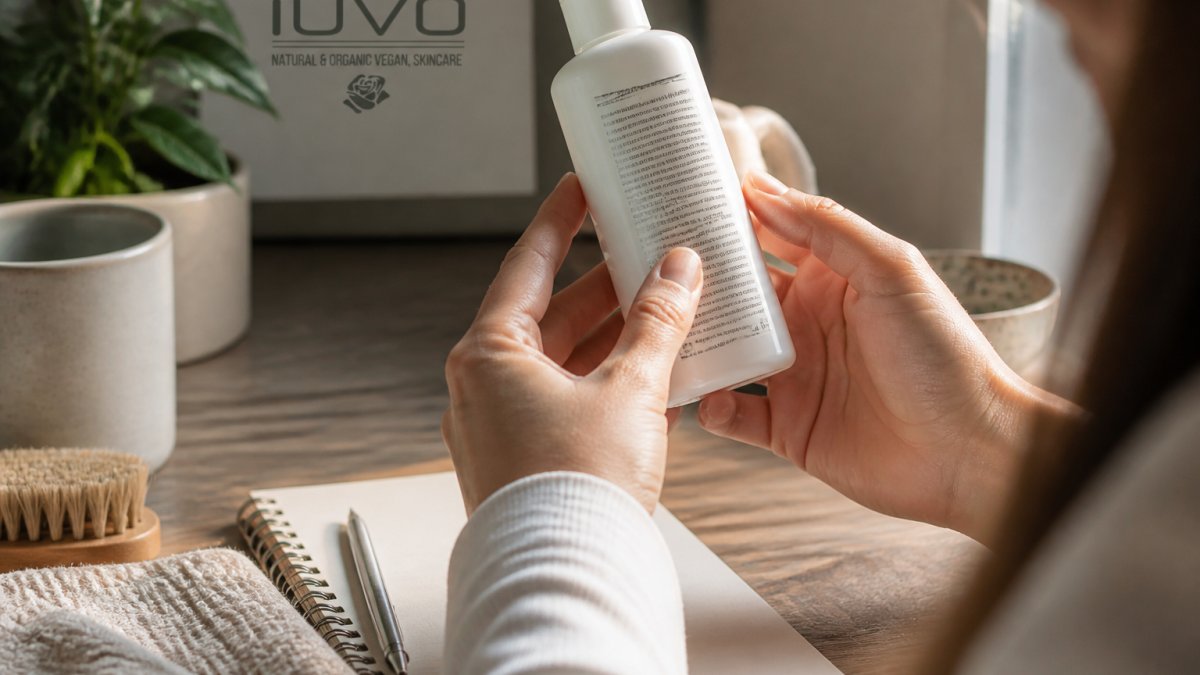
Be aware that "paraben-free" on the front of the pack is a marketing claim, not a regulated definition in the way "organic" is certified. The ingredient list on the back is the legal record. If the front says paraben-free and the back lists methylparaben, the back is what counts.
A Practical Checklist of Paraben Names and Variants
Use this checklist when you read a label. Tick off any name you find; one is enough to confirm the product contains a paraben.
- Methylparaben, the most common, typically used against fungi
- Ethylparaben, often paired with methylparaben
- Propylparaben, stronger against bacteria, frequently combined with methylparaben
- Butylparaben, longer chain, more potent antimicrobial action
- Isobutylparaben, a branched variant with similar function
- Isopropylparaben, another branched variant
- Benzylparaben, less common but still within the family
- Heptylparaben, a longer-chain variant
- Potassium methylparaben and sodium propylparaben, salt forms that function as preservatives
- 4-hydroxybenzoic acid, the parent compound, sometimes listed as the acid rather than the ester
- p-Hydroxybenzoic acid esters, a collective term covering the family
- Parahydroxybenzoate, an older naming convention still seen on some imports
Combinations are standard practice because different chain lengths target different organisms. A single product may list two or three of these together, which is why a quick scan of the first few ingredients can miss them. Look for the suffix anywhere in the list, and check products you would not instinctively think of: body lotions, deodorants, shaving creams, wet wipes, and even some "natural" brands that use parabens alongside botanical ingredients. The two are not mutually exclusive.
How to Read Around Marketing Claims
Front-of-pack claims such as "paraben-free", "clean" or "natural" are not standardised in the same way as certified organic labelling. The legal requirement is the ingredient list on the back or side of the pack. If a product claims to be paraben-free but lists any of the names above, treat the ingredient list as authoritative and do not buy it. Formulations also change, so re-check the label on every repurchase rather than assuming the product is unchanged.
Parabens and Sensitive Skin: What to Know
For people with sensitive skin, eczema or psoriasis, parabens are not usually the primary culprit, but they can be a secondary irritant. Allergic contact dermatitis to parabens is recognised in dermatology, though it is uncommon relative to other cosmetic allergens such as fragrance and preservatives like methylisothiazolinone.
The more common scenario is a reaction to something else in the product, with the paraben getting the blame because it is the ingredient people have been told to fear.
There is a practical point here for anyone with eczema or psoriasis: a product that is genuinely free of parabens but heavy in fragrance or essential oils may irritate more than a well-formulated product that uses a paraben. Patch testing a small area for a few days is more informative than reading the front of the pack.
Gentle Facial Cleansing Lotion | FACE | Linden Blossom →
Alternatives to Parabens in Cosmetics
The alternatives to parabens fall into a handful of families, each with its own strengths and weaknesses. Common options include phenoxyethanol, sodium benzoate and potassium sorbate, benzyl alcohol, and naturally derived systems built around essential oils or fermentation-derived preservatives.
Phenoxyethanol is widely used as a paraben replacement and is effective against bacteria, though it is weaker against fungi and often paired with something else. Sodium benzoate and potassium sorbate work well in acidic formulations but lose effectiveness as pH rises. Benzyl alcohol is effective but is itself a fragrance allergen for some people. Essential-oil-based systems appeal to the natural end of the market but carry their own sensitisation risk and are harder to validate for broad-spectrum protection.
Trade-Offs of Paraben-Free Preservation
The honest trade-off is that no preservative system is risk-free. Removing parabens means choosing a different set of compromises: potentially shorter shelf life, a narrower spectrum of antimicrobial activity, greater pH sensitivity, or increased risk of sensitisation from fragrance-based alternatives.
A "preservative-free" claim is worth scrutinising closely. Some products achieve it by using high concentrations of ingredients that function as preservatives without being labelled as such, or by formulating at extremes of pH or water activity. For a genuinely water-based cream or lotion, some form of antimicrobial protection is necessary for safety, and a product that claims none should prompt a question about how it stays safe after opening.
Matching the Preservative to the Product
Different product types need different preservation strategies. A water-based lotion or cream is the most vulnerable to microbial growth and needs broad-spectrum protection. An anhydrous balm or oil-based serum contains no water and is far less hospitable to microbes, so it may need little or no preservative. A rinse-off cleanser has brief contact with skin and can often use a simpler system than a leave-on moisturiser.
When you choose a paraben-free product, check that the preservative system suits the product type. A leave-on cream preserved only with an essential-oil blend may be less robust than one using a validated broad-spectrum system. If the product is labelled with a period-after-opening symbol, respect it; gentler preservation often means a shorter safe-use window once opened.
Storage and Contamination After Switching
Preservation protects a product, but it does not make it indestructible. Storage and hygiene habits matter as much as the preservative system, and they matter more in products with gentler preservation. Keep products out of direct sunlight and away from heat, which degrade preservatives and accelerate spoilage. Close lids properly, avoid introducing water into a jar, and use a spatula rather than fingers where you can. Discard anything that changes colour, smell or texture, regardless of the date on the pack.
A Balanced View of "Safer" Alternatives
Paraben-free does not automatically mean safer. Some alternative preservatives are associated with their own irritation or allergy risks, and a poorly preserved product can expose you to microbial contamination that is a clearer hazard than the paraben it replaced. Judge a product on its full formulation, its preservation system, and how you will store and use it, rather than on the absence of a single ingredient family.
Building a Paraben-Free Daily Skincare Routine
A paraben-free routine is a normal routine with a different preservation system, not a separate discipline. The structure stays the same: cleanse, treat if needed, moisturise, protect. What changes is the label check and, in some cases, the storage and use-by discipline.
At Iuvo Skincare, our range is formulated without parabens, sulphates, SLS or palm oil, and is 100% vegan certified and cruelty-free. That means a routine built around our products does not require a label audit for the paraben family at all. Our Gentle Facial Cleansing Lotion at £8.00 uses organic avocado and castor oils with a soft Linden Blossom scent to cleanse without stripping, while the Nourishing Day & Night Cream at £34.00 combines unrefined shea butter, aloe vera and rose water in a formula where 98.9% of ingredients are of natural origin.


How to Transition Your Routine Safely
Switching several products at once is the most common mistake we see. If a reaction occurs, you will not know which product caused it. Introduce one new item at a time, use it for at least a week before adding the next, and patch test on the inner forearm first if your skin is reactive.
Keep a simple note of what you introduced and when. If a flare-up appears, you have a record to work from. For anyone with eczema or psoriasis, avoid switching during an active flare; wait until the skin is calm so you can judge the new product fairly.
Product Storage, Contamination and Expiry
Preservation protects a product, but it does not make it indestructible. Storage and hygiene habits matter as much as the preservative system, and they matter more in products with gentler preservation.
Keep products out of direct sunlight and away from heat, which degrade preservatives and accelerate spoilage. Close lids properly, avoid introducing water into a jar, and use a spatula rather than fingers where you can. Respect the period-after-opening symbol, the small open-jar icon showing how many months the product remains safe after first use. Discard anything that changes colour, smell or texture, regardless of the date on the pack.
Who May Have a Specific Reason to Avoid Parabens
Some people have a clearer reason than others to make avoiding parabens a priority. Anyone with a diagnosed paraben allergy should avoid them outright, as should people who have patch-tested positive to the family. Those with a personal or family history of hormone-sensitive conditions may reasonably choose to avoid them as a precaution, understanding that this is a precaution rather than a response to established risk.
People undergoing cancer treatment often have fragile, reactive skin and are advised to simplify their routine and avoid known irritants. If that applies to you, speak to your clinical team about what to avoid, because their guidance will be specific to your treatment and situation. For most other people, avoiding parabens is a preference rather than a medical necessity, and it is fine to treat it as such.
Common Mistakes When Avoiding Parabens
The first mistake is trusting the front of the pack. "Paraben-free" is a marketing statement; the ingredient list is the legal one. Read the back every time, including on repurchases, because formulations change.
The second is assuming natural means gentle. Essential oils, botanical extracts and "clean" preservative alternatives can sensitise skin, and some of the most reactive products on the market are proudly paraben-free. If your skin is sensitive, judge a product on its full formulation and a patch test, not its marketing position.
The third is switching everything at once, which we covered above, and the fourth is neglecting storage. A paraben-free product stored in a hot bathroom with the lid off is not being kind to its preservation system. Treat the product well and it will treat your skin well.
Conclusion
The case for avoiding parabens in daily skincare rests on a reasonable precaution rather than proven harm. The evidence shows weak oestrogenic activity in laboratory conditions, no established causal link to breast cancer, and a regulatory framework that permits their use within assessed limits. If you choose to avoid them, do it with a clear understanding of the trade-offs and a proper label-reading habit.
Choosing paraben-free products is only half the work; the other half is finding a range you can trust across your whole routine. At Iuvo Skincare, every product is 100% vegan certified and cruelty-free, and formulated without parabens, sulphates, SLS or palm oil, with 98.9% of ingredients in our Nourishing Day & Night Cream from natural origin. Start with the Gentle Facial Cleansing Lotion at £8.00 and the Sensitive Face Wash with Rose Geranium at £8.00 to build a gentle cleansing base.

Frequently Asked Questions
What are the risks of parabens in skincare?
Parabens can mimic oestrogen by binding to oestrogen receptors, and some studies have detected them in breast tissue. However, current evidence does not establish that the low levels permitted in cosmetics cause harm. The main documented risk is allergic contact dermatitis, particularly for people with sensitive skin. Regulatory bodies continue to review the data, and permitted concentrations are kept low to maintain a wide margin of safety.
How can I tell if a skincare product contains parabens?
Check the ingredient list for names ending in -paraben: methylparaben, ethylparaben, propylparaben, butylparaben, isopropylparaben, isobutylparaben, benzylparaben and their sodium salts. In the UK and EU, ingredients must be listed by their INCI names, so these terms appear exactly as written. If a product claims to be paraben-free but the label is unclear, look for a full ingredient declaration or contact the brand directly.
Are paraben-free skincare products safer for sensitive skin?
Not automatically. Parabens are among the least sensitising preservatives, and some paraben-free alternatives, such as methylisothiazolinone, are more likely to trigger reactions. For sensitive skin, the priority is a product with a well-designed preservation system and a short, gentle ingredient list. Patch-test any new product on your inner forearm for 48 hours before applying it to your face.
What preservatives are used in paraben-free skincare?
Common alternatives include phenoxyethanol, sodium benzoate, potassium sorbate, benzyl alcohol, dehydroacetic acid and naturally derived options such as radish root ferment filtrate. Each has a different spectrum of activity against bacteria, mould and fungi, so formulators often combine two or more. No single natural preservative is universally the safest; the right choice depends on the product's water content, pH and packaging.
Do I need to avoid all types of parabens in my daily skincare routine?
Not necessarily. If your skin tolerates your current products and you have no specific health concern, the evidence does not require you to eliminate every paraben. If you prefer to avoid them, focus on leave-on products such as moisturisers and serums, where exposure is highest. A practical approach is to read labels, choose products with a clear preservation system, and prioritise products from brands that disclose full ingredients.
Which ingredients should I look for when choosing paraben-free skincare?
Look for a named preservative system rather than a vague 'preservative-free' claim, which is rarely true for water-based products. Ingredients such as phenoxyethanol, sodium benzoate or potassium sorbate indicate a product is protected. Also check for skin-friendly additions like glycerin, aloe vera or shea butter. Avoid products that list only 'natural' without a full INCI declaration, as these are harder to assess for both safety and stability.


