
UpCircle vs Evolve Beauty: A 2026 Skincare Comparison
by Ian Gabbidon on Oct 18, 2026

Table of Contents
- UpCircle vs Evolve Beauty at a Glance
- UpCircle vs Evolve Ingredients: Formulation and Sourcing
- UpCircle Reviews: What Buyers Actually Say
- Evolve Organic Beauty Reviews: Strengths and Trade-Offs
- Skincare for Sensitive Skin: Which Brand Suits Which Concern
- Sustainability and Environmental Impact Compared
- Price, Product Size and Cost per Millilitre
- Limitations and Trade-Offs Neither Brand Solves
- Which Brand Should You Choose?
- Frequently Asked Questions
Last Updated: October 17, 2026
UpCircle vs Evolve Beauty at a Glance
The UpCircle vs Evolve Beauty comparison comes down to a single question: do you want a brand built on rescued waste ingredients, or one built on certified organic formulations? UpCircle is a British skincare brand that upcycles coffee grounds, fruit stones and other by-products into its product range. Evolve Organic Beauty is a British brand focused on certified organic, cruelty-free formulations with a focus on active ingredients and eco-friendly packaging. Both sit in the natural skincare space. Neither is the right answer for every skin type.
Here at Iuvo Skincare, we make handmade, vegan-certified products in small batches, so we read ingredient labels the way other people read the news. That habit shapes this comparison. We are not here to crown a winner in the abstract. We are here to tell you which brand suits which skin, which budget, and which set of values.
Below, we break down formulation, sourcing, reviews, sensitive-skin suitability, sustainability claims and cost per millilitre, so you can decide without wading through marketing copy.
| Criteria | UpCircle | Evolve Beauty |
|---|---|---|
| Core idea | Upcycled, waste-derived ingredients | Certified organic, active-led formulations |
| Ingredient sourcing | By-products from coffee, fruit and food industries | Organic farming sources, plant-based actives |
| Certification focus | Circular economy, cruelty-free | Organic certification, cruelty-free |
| Sensitive skin approach | Fragrance present in several lines | Fragrance-free options in the range |
| Packaging | Recycled and recyclable materials | Recyclable glass and refill options |
| Price positioning | Mid-market | Higher mid-market to premium |
| Best for | Buyers who prioritise waste reduction | Buyers who prioritise organic certification |
UpCircle vs Evolve Ingredients: Formulation and Sourcing
UpCircle wins on waste reduction; Evolve wins on certified organic content. That is the honest one-line answer to the UpCircle vs Evolve ingredients question. Everything else is detail.
UpCircle's formulation philosophy starts with what would otherwise be thrown away. Coffee grounds from cafes, fruit stones from juice production, and similar by-products become the base of scrubs, oils and creams. The brand's argument is straightforward: the cosmetic industry grows plants specifically to extract oil from them, while food production discards material with similar properties. Reusing it cuts waste and reduces the demand for new raw material.
Evolve's approach is closer to traditional organic beauty. Formulas lean on certified organic plant oils, butters and active ingredients, with a stated commitment to avoiding harsh additives. The emphasis is on what goes in, not what gets rescued.
Both brands publish ingredient lists, which matters more than any badge. If you have contact allergies, read the full INCI list on each product page before you buy, not the front-of-pack claims.
Upcycled and Waste-Derived Ingredients
Upcycled ingredients are cosmetic raw materials recovered from food or agricultural by-products and reprocessed for use in skincare. Coffee grounds, fruit stones, seed husks and juice pulp are common examples. The appeal is environmental: less waste to landfill, less land and water used to grow fresh material.
The trade-off is consistency. A by-product stream varies by season and supplier, so formulators have to work harder to keep each batch the same. Ask any brand using upcycled material how it verifies raw material quality, and listen carefully to the answer.
Certifications and Product Standards
Certifications are where marketing claims meet paperwork. Organic certification for cosmetics is typically verified against a recognised standard, and cruelty-free claims are usually backed by a recognised programme. Neither brand's certification status should be taken from a blog post, including this one. Check the current certificate on each brand's own site, and check the certifying body's public register where one exists.
For UK buyers, the Cosmetics Regulation guidance from the Office for Product Safety and Standards sets out the safety and labelling rules every cosmetic sold here must meet, including the requirement for a named responsible person and a cosmetic product safety report. That applies to both brands regardless of size.
UpCircle Reviews: What Buyers Actually Say
UpCircle reviews tend to cluster around two themes: effectiveness of the exfoliating and body products, and texture. Buyers who like the brand often praise the scrub formats and the visible environmental story. The criticism that appears most often concerns scent and grit, which is unsurprising for products built on coffee grounds and fruit stone particles.
A pattern worth noting: people with sensitive skin report mixed experiences. Some love the body range and use nothing else. Others find the fragranced lines too much for facial skin, particularly around the eyes and on reactive cheeks.
That is not a flaw unique to UpCircle. It is the nature of a brand whose identity depends on textured, aromatic raw materials. If your skin reacts to essential oils or physical exfoliants, patch test first and keep the scrubs away from your face until you know how your skin responds.
Evolve Organic Beauty Reviews: Strengths and Trade-Offs
Evolve Organic Beauty reviews generally praise formulation quality and the brand's transparency about organic content. Buyers frequently mention the face oils and serums as the standout products, and the refill and recycling options get consistent credit.
The trade-offs are price and availability. Evolve sits at a higher price point than mass-market natural brands, and the range is smaller than what you would find on a typical high-street shelf. That means fewer entry-level options if you want to try the brand cheaply.
A second point that comes up: organic certification does not automatically mean suitable for reactive skin. A certified organic essential oil is still an essential oil. If your skin flares around fragrance, check the specific product rather than the brand's overall positioning.
Skincare for Sensitive Skin: Which Brand Suits Which Concern
Skincare for sensitive skin is where brand positioning matters least and ingredient lists matter most. Neither UpCircle nor Evolve is a dedicated sensitive-skin brand. Both carry products that suit reactive skin and products that do not.
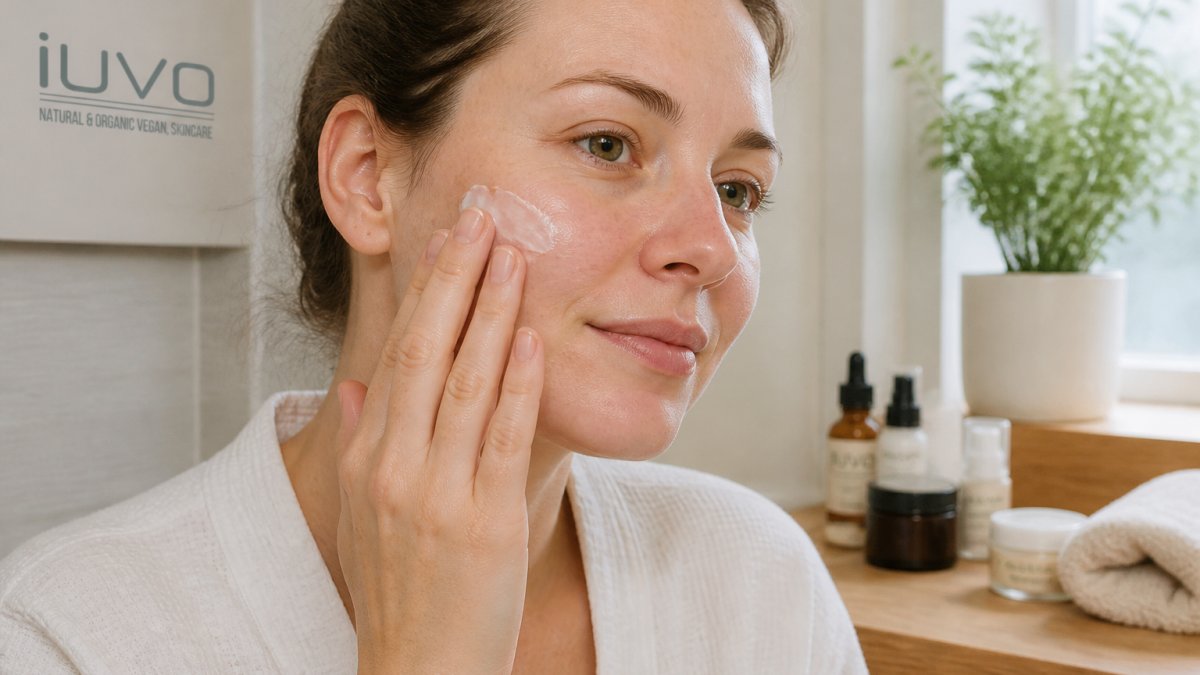
Our rule of thumb after years of formulating for reactive skin: match the product to the concern, not the brand to the person.
- Dryness and barrier damage: look for unfragranced butters and oils with short ingredient lists.
- Eczema-prone skin: avoid essential oils and physical scrubs until the skin is calm.
- Congestion and oiliness: clay-based masks and light lotions beat heavy butters.
- Reactivity to fragrance: choose unfragranced across the whole routine, not just the moisturiser.
This is exactly why we built our range the way we did. Our Nourishing Day & Night Cream uses organic unrefined shea butter, aloe vera, rose geranium and rose water, with 98.9% of total ingredients from natural origin. Our Deep Hydrating Unscented Face & Body Butters skip fragrance entirely, which is the version we point reactive skin toward first.

Fragrance, Allergens and Eczema-Prone Skin
Fragrance is the single most common trigger in cosmetic reactions, and "natural" fragrance is not automatically gentler. Essential oils contain allergens such as limonene and linalool, both of which must be declared on the label above set thresholds under UK cosmetic labelling rules.
If your skin is eczema-prone, treat fragrance-free as the default and add scent back only when your skin is stable. A soothing routine with no fragrance for six weeks tells you more than any product claim.
Sustainability and Environmental Impact Compared
Sustainability claims deserve scrutiny, and this is where the two brands diverge most clearly. Most comparisons treat "sustainable" as a single label. It is not. It is at least four separate claims, ingredient origin, packaging, refill and end-of-life, and certification, and the two brands are strong on different ones.
Ingredient origin and waste
UpCircle's environmental case rests on measurable waste diversion: material that would have gone to landfill becomes product. Coffee grounds, fruit stones and similar by-products are recovered and reprocessed. That is a concrete, checkable claim, and it is the brand's strongest asset. The trade-off is that by-product streams vary by season and supplier, so formulators have to work harder to keep each batch consistent.
Nourishing Day & Night Cream | 100ml | Face | Butter Cream →
Evolve's case rests on organic farming, which has documented environmental benefits around soil health and reduced synthetic input use, though the evidence varies by crop and standard. Organic certification is auditable in a different way from waste diversion: it is verified against a published standard by a named certifying body, rather than against a tonnage figure the brand reports itself.
Packaging and refill
The packaging comparison is more practical than the ingredient one, because you handle it every day.
- UpCircle uses recycled and recyclable materials across much of its range. The question to ask is what the material actually is, aluminium, glass, recycled plastic, because kerbside recyclability varies by local authority. A bottle marked recyclable is not necessarily recyclable in your bin.
- Evolve uses recyclable glass and offers refill options on selected lines. Refill schemes reduce packaging per use only if you actually refill repeatedly; a refill bought once and abandoned has a worse footprint than a single recyclable bottle used to the end.
Neither brand publishes a full lifecycle carbon footprint for every product, and that is normal across the sector. If environmental impact is your deciding factor, weight the claim you can verify. Waste diverted and certification status are easier to audit than a general sustainability statement.
How to audit a sustainability claim
A short checklist works better than brand loyalty here:
- Name the certifying body. "Certified organic" means little without the standard and the body behind it. Check the certifying body's public register where one exists.
- Check the packaging material, not the badge. Look at the base of the jar or bottle for the material code, then check whether your local authority accepts it.
- Ask what happens at end of life. A refill pouch that cannot be recycled may be worse than a glass jar that can.
- Separate the claim from the product. A brand can have a strong waste story and a product that does not suit your skin. The two questions are independent.
Price, Product Size and Cost per Millilitre
Price per bottle tells you very little. Cost per millilitre tells you what you are actually paying, and it changes the picture considerably. Most roundups stop at "affordable" or "premium" and leave it there. This section does the arithmetic instead.
A fair comparison needs three numbers for each product: the shelf price in pounds, the fill volume in millilitres, and the resulting cost per 100ml. Use the same formula for every product so the comparison is like-for-like:
Cost per 100ml = (price ÷ millilitres) × 100
Worked examples make the trap obvious. A £20 50ml serum works out at £40 per 100ml. A £30 100ml cream works out at £30 per 100ml. The cheaper-looking product is often the more expensive one once you normalise for volume. Apply the same sum to a 200ml body lotion and a 30ml face oil and the ranking can flip entirely.
Three practical points when you run this comparison on UpCircle and Evolve:
- Match product type before matching price. A 100ml body scrub and a 30ml facial serum are not substitutes, so comparing their unit prices tells you nothing useful. Compare cleanser to cleanser, moisturiser to moisturiser, serum to serum.
- Check the current size on the product page, not the marketing copy. Brands change fill volumes between reformulations and repackaging, and a size quoted in a review from two years ago may no longer be sold.
- Factor in delivery and minimum order thresholds. A lower unit price plus a delivery charge can cost more than a higher unit price with free delivery over a threshold. Add the delivery cost to the basket total before you divide.
Evolve generally sits higher on shelf price, and several of its lines come in larger sizes, which narrows the per-millilitre gap. UpCircle generally sits lower on entry price, with smaller formats on some lines. Neither brand is cheap, and neither claims to be. The only way to know which is better value for the product you actually want is to run the sum on that specific product.
For context on where a handmade, small-batch range lands, our own pricing is transparent: Gentle Facial Cleansing Lotion at £8.00 for 150ml (about £5.33 per 100ml), Balancing Toner at £8.00 for 150ml (about £5.33 per 100ml), Gentle Vitamin Face Mask at £9.00 for 100ml (£9.00 per 100ml), and the Nourishing Day & Night Cream at £34.00 for 100ml (£34.00 per 100ml).


Limitations and Trade-Offs Neither Brand Solves
Neither brand is a universal answer, and pretending otherwise would waste your money.
UpCircle's upcycled model constrains formulation. By-product supply is variable, and the range leans on textures and aromas that reactive skin may not tolerate. Evolve's organic model constrains price and range size, and organic certification does not guarantee suitability for eczema-prone skin.
Neither brand offers the full picture on sensitive-skin safety in a single page. You still have to read ingredient lists, patch test, and introduce one product at a time. No brand removes that work for you.
Where a handmade, small-batch range genuinely differs is batch traceability and short ingredient lists. That is the gap we built Iuvo Skincare to fill: vegan-certified, free from parabens, sulphates and palm oil, made in small batches so you can ask exactly what went into the jar.
Which Brand Should You Choose?
Choose UpCircle if waste reduction is your priority and your skin tolerates fragrance and physical exfoliants. Choose Evolve Beauty if certified organic formulation and refillable packaging matter more to you than price, and you are willing to check each product for fragrance.
Choose neither if your skin is actively reactive. In that case, start with an unfragranced, short-ingredient-list routine and add complexity later.
That is where we would point you. Iuvo Skincare is a family-run, triple award-winning, vegan-certified range handmade in small batches, free from nuts, palm oil, SLS, sulphates and parabens, and never tested on animals. Our Gentle Facial Cleansing Lotion and Deep Hydrating Unscented Face & Body Butters are the two products we suggest first for sensitive skin.
Reactive skin rarely rewards brand loyalty; it rewards ingredient discipline. If you have spent years testing natural brands that still triggered a flare, start with an unfragranced, short-list routine and build from there. Iuvo Skincare makes vegan-certified, handmade products free from parabens, sulphates and palm oil, with options like our unscented face and body butters and our gentle Linden Blossom cleansing lotion designed for exactly that starting point. Search our store to find the routine that fits your skin.
Frequently Asked Questions
How do UpCircle and Evolve Beauty compare on ingredients?
UpCircle builds its formulas around upcycled ingredients such as coffee grounds and fruit stones, which gives it a distinctive waste-reduction story. Evolve Beauty leans towards certified organic, plant-based actives with a strong emphasis on formulation and ingredient transparency. Both avoid the harshest additives, but they differ in sourcing philosophy: UpCircle prioritises reused by-products, while Evolve prioritises organic certification across its range. If ingredient origin matters most to you, read the full INCI list on each product page rather than relying on front-of-pack claims.
Which brand is better for sensitive skin, UpCircle or Evolve Beauty?
Neither brand is universally better for sensitive skin because reactions depend on your specific triggers. Evolve Organic Beauty reviews often highlight gentle, fragrance-conscious formulas, while UpCircle reviews mention that some products contain essential oils that may not suit reactive skin. Patch test any new product on your inner forearm for 48 hours before applying it to your face. If you have eczema or rosacea, keep the routine short and avoid products with added fragrance until you know your skin tolerates them.
Are UpCircle and Evolve Beauty products vegan and cruelty-free?
Both brands are widely described as cruelty-free and mostly vegan, but the details vary by product rather than by brand. Some formulas include beeswax or honey, so check the individual ingredient list before buying if strict vegan status matters to you. Look for recognised cruelty-free certification logos rather than relying on marketing wording alone. If a brand claims vegan status without a certification body named on the packaging, ask their customer service team for evidence before committing to a full routine.
Which brand has the more sustainable skincare packaging?
UpCircle has a clear edge on packaging circularity because its brand identity is built around reclaimed and recyclable materials, and it actively collects used coffee grounds from cafes. Evolve Beauty uses recyclable glass and encourages refill options on selected lines. Neither brand publishes a full carbon footprint per product, so treat packaging claims as one signal among several. The most reliable comparison is to check whether the specific product you want is refillable, whether the outer carton is plastic-free, and whether the brand publishes waste-reduction data.
What is the best 100% natural skincare brand for a full routine?
No single brand is best for everyone, and few products are genuinely 100% natural once water and preservatives are counted. Compare brands on what they exclude, what they certify, and how much of the formula comes from organic farming. Iuvo Skincare, for example, states that its Nourishing Day & Night Cream is 98.9% natural origin and 64.6% organic, which is a more useful benchmark than a vague natural claim. Build your routine around one cleanser, one moisturiser and one treatment, then add products only when your skin is stable.


