
Evolve Beauty Alternative for Hydration: 2026 Guide
by Ian Gabbidon on Sep 30, 2026

Table of Contents
- Why Shoppers Look for an Evolve Beauty Alternative for Hydration
- How to Treat Dehydrated Skin Naturally
- What to Look For in a Hydrating Alternative
- Hydrating Products Compared: Prices and Key Ingredients
- Vegan Skincare for Dehydrated Skin
- Palm Oil Free Moisturiser Benefits
- Budget to Luxury: Building a Hydrating Routine
- Addressing Skin Texture and Dryness
- Fragrance-Free and Sensitive Skin Options
- Frequently Asked Questions
Last Updated: September 30, 2026
Why Shoppers Look for an Evolve Beauty Alternative for Hydration
Dehydrated skin is not the same as dry skin, and that distinction explains why so many people start hunting for an Evolve Beauty alternative for hydration in the first place. Dehydrated skin lacks water; dry skin lacks oil. A moisturiser built for one often disappoints on the other, which is why shoppers who loved a particular natural brand's approach still find themselves searching for something that suits their skin better. At Iuvo Skincare, we hear this constantly from customers who have tried several "natural" ranges and still ended up with tight, dull, uncomfortable skin.
The real issue is rarely the brand itself. It is the ingredient architecture underneath it.
Most hydrating ranges lean heavily on one or two humectants and call it a day. That works for a while, until the skin barrier is compromised and water starts escaping faster than any humectant can pull it in. According to NHS guidance on atopic eczema and emollients, people with sensitive or eczema-prone skin benefit most from consistent, gentle moisturising rather than frequent product switching.
So the search for an alternative is usually a search for better balance.
This guide breaks down what actually matters: which ingredients hold water, which ones seal it in, which formulas suit reactive skin, and how to build a hydrating routine at any budget. Below, we'll show you exactly how to read a label and spot the difference between a genuinely hydrating formula and one that just feels nice for ten minutes.
How to Treat Dehydrated Skin Naturally
Treating dehydrated skin naturally starts with reducing what strips it, then rebuilding what holds water in. Most people do this backwards: they add more products instead of removing the harsh ones first.
A common approach is to simplify before you add. Cut foaming cleansers, alcohol-heavy toners, and anything with a strong fragrance load. Then reintroduce hydration in layers.
Here is a workable sequence:
- Switch to a cream or oil cleanser. A gentle cleansing balm or lotion removes grime without stripping the lipid barrier.
- Use a hydrating toner or facial mist while skin is still damp. Water applied to damp skin absorbs more evenly.
- Apply a humectant-rich serum or oil. Look for glycerin, aloe, or plant oils that attract and hold moisture.
- Seal with an emollient or occlusive. This is the step most people skip, and it is the one that keeps water from evaporating.
- Repeat morning and night. Consistency matters more than product count.
Many people with dehydrated skin also have an impaired barrier, which is why the next section matters so much.
What to Look For in a Hydrating Alternative
A good hydrating alternative contains at least one humectant, one emollient, and one occlusive. Formulas that only do one of those three jobs tend to underperform, no matter how premium the packaging. But the more important question is which of those three your skin actually needs, and that depends on whether you are dry, dehydrated, or both.
Dry vs Dehydrated: The Distinction That Changes Everything
Dry skin lacks oil. Dehydrated skin lacks water. They feel similar, tight, dull, sometimes flaky, but they need different things.
| Dry Skin | Dehydrated Skin | |
|---|---|---|
| What is missing | Lipids (oil) | Water |
| How it feels | Rough, tight, sometimes scaly | Tight, dull, fine lines more visible |
| What helps most | Emollients and occlusives | Humectants, sealed with an occlusive |
| What can make it worse | Stripping cleansers, alcohol | Heavy occlusives without humectants underneath |
| Common trigger | Genetics, ageing, cold weather | Heating, air conditioning, hot showers, caffeine, alcohol |
Many people are both. In that case, the routine is humectant first, emollient second, occlusive last. Reversing that order traps nothing.
Humectants, Emollients and Occlusives
These three categories do different work, and a formula that covers all three will outperform one that repeats the same category three times.
- Humectants pull water into the skin. Glycerin, aloe vera, panthenol, and hyaluronic acid are the common ones. Glycerin is the most reliable; hyaluronic acid plumps the surface but needs sealing.
- Emollients soften and smooth by filling gaps between skin cells. Plant oils, shea butter, and squalane sit here. Squalane is the lightest and suits oily or acne-prone skin best.
- Occlusives form a seal that slows water loss. Beeswax, some butters, and heavier oils do this job. Coconut oil is an effective occlusive but can clog pores for some.
Skin Type Compatibility Matrix
Not every hydrating formula suits every skin type. This matrix maps the main categories to what tends to work best.
| Skin Type | Priority Ingredient | Avoid | Best Texture |
|---|---|---|---|
| Dehydrated + oily | Light humectants, squalane | Heavy butters, coconut oil | Gel, light lotion |
| Dehydrated + dry | Humectant + occlusive | Alcohol-based toners | Butter, rich cream |
| Dry (not dehydrated) | Emollients, occlusives | Foaming cleansers | Balm, rich butter |
| Sensitive / reactive | Ceramides, aloe, jojoba | Synthetic fragrance | Fragrance-free cream |
| Eczema-prone | Emollient-heavy, ceramides | Sulphates, essential oils | Unscented balm or butter |
| Mature skin | Rosehip, squalane, ceramides | Harsh exfoliants | Oil plus cream |
The pattern is consistent: reactive skin types do better with fewer ingredients, not more. And dehydrated skin does better with water-attracting ingredients underneath a seal, not a heavy cream applied to dry skin.
Hydrating Products Compared: Prices and Key Ingredients
Most hydrating guides list products and prices and stop there. That tells you what something costs, not whether it will work on your skin. The more useful comparison is ingredient-level: which humectant is doing the pulling, which emollient is doing the softening, and which occlusive is doing the sealing. Below is that comparison, followed by how the main alternatives in a hydrating routine stack up on price.
Humectant Comparison: What Actually Pulls Water In
Humectants are not interchangeable. They differ in molecular size, how deep they penetrate, and how they behave in low humidity.
| Humectant | Mechanism | Best For | Trade-off |
|---|---|---|---|
| Glycerin | Small molecule, draws water from the dermis and the air | Almost all skin types; cheap and well-tolerated | In very low humidity it can pull water from deeper skin if not sealed |
| Hyaluronic acid | Large molecule, holds many times its weight in water at the surface | Plumping the upper layers; fine lines | High molecular weight sits on the surface; needs an occlusive on top |
| Polyglutamic acid | Larger than HA, forms a film that reduces water loss | Holding hydration at the surface for longer | Less widely available; often paired with HA rather than replacing it |
| Aloe vera | Gel-like polysaccharides, soothing as well as hydrating | Reactive, sun-exposed, or irritated skin | Mild humectant on its own; usually needs a partner |
| Panthenol (pro-vitamin B5) | Small molecule, penetrates and supports barrier repair | Compromised, flaking, or post-treatment skin | Not a strong water-holder by itself |
A common pattern is to layer a small-molecule humectant (glycerin or panthenol) under a larger one (hyaluronic or polyglutamic acid), then seal. That covers both depth and surface.
Emollient and Occlusive Comparison
Emollients fill the gaps between skin cells; occlusives sit on top and slow water loss. Some ingredients do both.
| Ingredient | Primary Role | Texture | Note |
|---|---|---|---|
| Squalane | Emollient | Light, non-greasy | Closest to skin's own sebum; suits oily and dehydrated skin |
| Jojoba oil | Emollient | Waxy, absorbs well | Resembles sebum; helps with itching |
| Rosehip oil | Emollient | Dry, fast-absorbing | Naturally contains vitamins A and C |
| Shea butter | Emollient + mild occlusive | Rich, heavy | Best for dry or mature skin, not oily |
| Coconut oil | Occlusive | Solid at room temperature | Effective seal; can clog pores for some |
| Beeswax | Occlusive | Firm, waxy | Strong seal; not vegan |
Price Tiering: Budget, Mid-Range and Luxury
Price does not track directly with performance, but it does track with concentration, certification, and packaging. Here is how the tiers typically break down for a hydrating routine.
| Tier | Typical Price Band | What You Are Paying For |
|---|---|---|
| Budget | Under £10 per product | Simple formulas, fewer actives, basic packaging |
| Mid-range | £10-£30 per product | Higher active concentrations, certification, better textures |
| Luxury | £30+ per product | Brand, rare actives, premium packaging, often smaller sizes |
The trap is paying luxury prices for a budget formula. Check the first five ingredients: if glycerin, water, and a single oil are doing all the work, the price is in the label, not the formula.
The Routine Compared
| Product | Price | Key Ingredients | Functional Coverage | Best For |
|---|---|---|---|---|
| Deep Hydrating Unscented Face & Body Butter | £9.00 | Coconut, jojoba, rosehip, neem oils | Emollient + occlusive | Sensitive, reactive skin |
| Deep Hydrating Scented Face & Body Butter | £9.00 | Coconut, jojoba, rosehip oils | Emollient + occlusive | Everyday hydration |
| Rosehip, Grapeseed & Jojoba Face & Body Oil, 30ml | £9.00 | Grapeseed, jojoba, rosehip oils | Emollient | Trying a routine first |
| Rosehip, Grapeseed & Jojoba Face & Body Oil, 100ml | £24.00 | Grapeseed, jojoba, rosehip oils | Emollient | Full face and body use |
| Nourishing Day & Night Cream, 100ml | £34.00 | Shea butter, aloe vera, rose geranium | Humectant + emollient | Daily face routine |
| Gentle Facial Cleansing Lotion | £8.00 | Avocado oil, castor oil, linden blossom | Emollient cleanser | Gentle cleansing |
| Balancing Toner, White Lotus | £8.00 | White lotus extract | Light humectant | Post-cleanse hydration |
What most guides miss is that the cheapest item on this list, a £9 butter, covers two of the three functional categories at once. Coconut oil seals, jojoba helps prevent itching, and rosehip supports skin regeneration. That combination is hard to beat at the price. The one thing it does not do is pull water in, which is why it works best layered over a damp toner or a humectant serum.


Vegan Skincare for Dehydrated Skin
Vegan skincare for dehydrated skin works on exactly the same principles as any other hydrating routine. The difference is where the ingredients come from, not how they behave.
NOURISH AWARD WINNING Deep Hydrating →
Plant-derived humectants and emollients perform well. Aloe vera, glycerin from vegetable sources, jojoba, rosehip, and shea butter all hydrate effectively without animal-derived inputs. For anyone building a routine around The Vegan Society's definition of vegan certification, the practical question is whether the formula still delivers on moisture retention.
It usually does. Jojoba oil closely resembles the skin's own sebum, which is why it absorbs without clogging pores. Rosehip brings vitamins A and C, supporting skin texture over time. These are the same actives you would find in any well-formulated hydrating product.
The catch is cost. Genuine vegan certification adds a layer of verification that some brands skip, and that shows up in the price. Iuvo Skincare holds vegan certification across its range, which matters if you want proof rather than a marketing claim.
Palm Oil Free Moisturiser Benefits
A palm oil free moisturiser benefits both your skin and the supply chain behind it. On the skin side, removing palm-derived emulsifiers often means simpler formulas with fewer filler ingredients. On the ethical side, it removes a link to deforestation-heavy supply chains that many conscious shoppers want to avoid.
For reactive skin, there is a practical upside too. Palm-derived ingredients are not inherently irritating, but formulas built around them often carry a longer ingredient list. Shorter lists mean fewer chances of reacting to something.
Iuvo Skincare's range is free from palm oil alongside parabens, sulphates, and SLS. That combination matters most for people who have already reacted to something and want to reduce variables.
Budget to Luxury: Building a Hydrating Routine
Building a hydrating routine at any budget works best when you spend on the layers that stay on your skin and save on the ones that get rinsed off. Cleansers and toners have minutes of contact time. Oils, butters, and creams sit on the skin for hours.
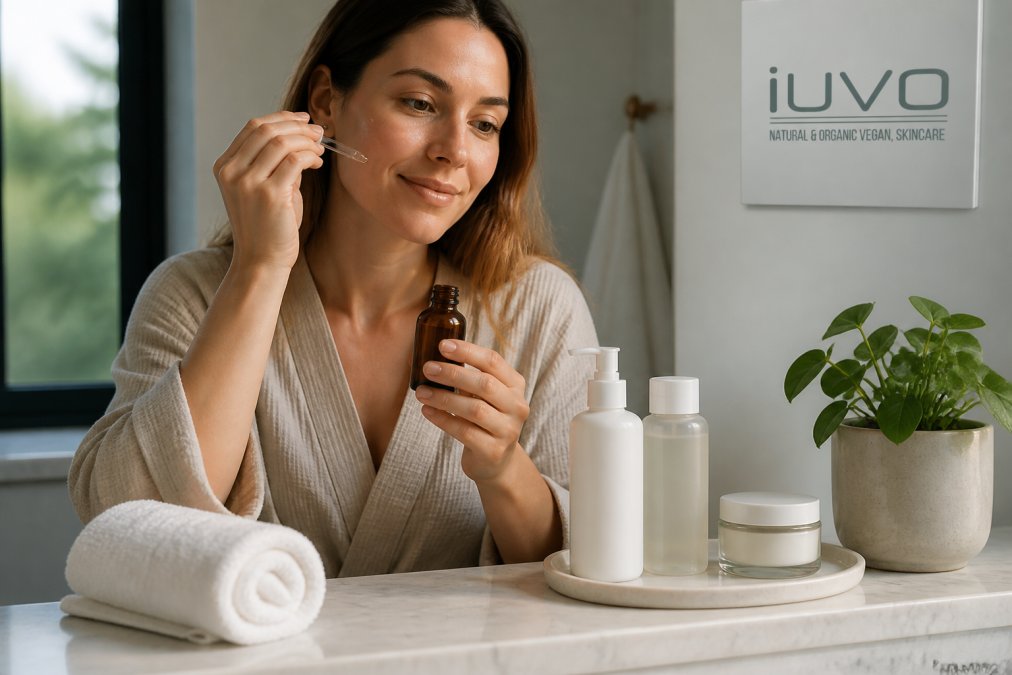
A budget-first routine might look like this:
- Cleanser: £8 gentle cleansing lotion
- Toner: £8 balancing toner, or skip and use a facial mist
- Oil: £9 for the 30ml face and body oil
- Seal: £9 unscented butter
That is a complete four-step routine for under £35. If you want to step up, swap the 30ml oil for the 100ml version at £24 and add the £34 day and night cream for a richer finish.
The upgrade is not about more products. It is about more contact time with the ingredients that hold water in.
Addressing Skin Texture and Dryness
Skin texture and dryness improve when the barrier repairs, not when you exfoliate harder. This is the single most common mistake in dehydrated skin routines.
Rough, flaky texture is usually a symptom of water loss, not dead skin buildup. Adding acids on top of a compromised barrier makes it worse. The fix is to rebuild first, then exfoliate gently once the barrier is stable.
A practical order of operations:
- Stop all exfoliants for two weeks
- Switch to a fragrance-free cleanser
- Add a humectant layer on damp skin
- Seal with an oil or butter morning and night
- Reintroduce gentle exfoliation once texture smooths
Most people see texture improve within a few weeks of consistent barrier support. The British Association of Dermatologists patient information on dry skin notes that emollient use is the foundation of managing dry and dehydrated skin, not an add-on.
Fragrance-Free and Sensitive Skin Options
Fragrance-free formulas are the safer choice for sensitive, eczema-prone, or treatment-compromised skin. Fragrance is one of the most common triggers for contact reactions, and "natural" fragrance is not automatically gentler than synthetic.
That is why unscented options matter. Iuvo Skincare's Deep Hydrating Unscented Face & Body Butter uses coconut, jojoba, rosehip, and neem oils with no added fragrance. Jojoba helps prevent itching, which is useful for anyone dealing with dry, uncomfortable patches. Neem oil assists with pain relief, though it carries a strong nutty smell that some people notice.
For anyone whose skin is fragile, whether from eczema, psoriasis, or cancer treatment side effects, the ingredient list matters more than the marketing. Fewer ingredients, no added fragrance, and no sulphates or parabens is a reasonable baseline to work from.
Dehydrated skin rarely needs more products. It needs the right ones, applied in the right order, consistently. Iuvo Skincare makes that straightforward with a range that is vegan certified, handmade, and free from palm oil, parabens, sulphates, and SLS, so sensitive skin is not left guessing. Start with the Deep Hydrating Unscented Face & Body Butter at £9.00 and the Gentle Facial Cleansing Lotion at £8.00, then build from there. Search our store to find the routine that fits your skin.
Frequently Asked Questions
What is the best Evolve Beauty alternative for hydration?
The best Evolve Beauty alternative for hydration depends on your skin type and budget. For sensitive or eczema-prone skin, unscented formulas are safest. Iuvo Skincare's Deep Hydrating Unscented Face & Body Butter at £9.00 uses coconut, jojoba, rosehip and neem oils to soothe and prevent itching. For a complete face routine, the Nourishing Day & Night Cream at £34.00 blends organic shea butter, aloe vera and rose water. Both are vegan certified and handmade in the UK.
Which hydrating skincare brands are vegan and palm oil-free?
Vegan and palm oil-free options are increasingly common, but certifications matter. Look for products carrying a recognised vegan trademark rather than relying on marketing claims alone. Iuvo Skincare holds vegan certification and excludes palm oil, parabens, sulphates and SLS from its range. Their Rosehip, Grapeseed & Jojoba Face & Body Oil at £24.00 for 100ml is a vegan, palm oil-free choice for face and body hydration, with a 30ml travel size at £9.00.
How do I choose a hydrating moisturiser for sensitive skin?
Start with fragrance-free or low-fragrance formulas, because added perfume is a common trigger for reactive skin. Check the ingredient list for humectants like aloe vera that draw water into the skin, and occlusives like shea butter that hold it there. Avoid known irritants such as high concentrations of essential oils. Patch test on your inner forearm for 48 hours before applying to your face, especially if you have eczema or psoriasis.
Are there British-made skincare brands that focus on deep hydration?
Yes, several smaller British brands specialise in hydration without harsh additives. Iuvo Skincare is a family-run company that handmakes its products in the UK, using raw butters and botanical oils. Their range is 100% vegan certified, cruelty-free and free from nuts, palm oil, SLS, sulphates and parabens. The Nourishing Day & Night Cream is 98.9% natural origin and 64.6% organic, making it a gentle option for dry, dehydrated or sensitive skin.
What ingredients should I look for in a hydrating skincare alternative?
Look for a mix of humectants, emollients and occlusives. Humectants such as aloe vera and glycerin attract water. Emollients like jojoba and grapeseed oil soften and smooth. Occlusives such as shea butter and coconut oil seal moisture in and reduce trans-epidermal water loss. Rosehip oil adds vitamins A and C to support skin regeneration and improve texture. Avoid synthetic chemicals, drying alcohols and added fragrance if your skin is reactive.


