
Benefits of Body Oil for Hydration: A Complete Guide
by Ian Gabbidon on Oct 23, 2026

Last Updated: October 23, 2026
Quick Summary
Body oil hydrates by sealing moisture into the skin rather than adding water, forming a protective layer that slows water loss and supports the lipid barrier. Apply body oil to damp skin within three minutes of washing so it traps water already there. It works best layered with a humectant-rich lotion underneath.
- Body oil is mostly emollient and occlusive, so it pairs well with a humectant-rich product underneath.
- Apply oil within three minutes of patting dry, while skin is still damp and warm.
- For very dry skin, use the L.O.C. method: liquid, then oil, then cream on the driest areas.
- Jojoba and grapeseed oils are generally considered low on the comedogenic scale.
- Patch-test any new oil on the inner arm for 48 hours if you have eczema or psoriasis.
Table of Contents
- Why Body Oil Belongs in Your Hydration Routine
- How Body Oil Works on the Skin Barrier
- The Benefits of Using Body Oil for Hydration
- Body Oil vs Lotion: Which One Hydrates Better?
- How to Use Body Oil for Maximum Absorption
- When to Apply Body Oil for the Best Results
- Choosing Body Oil for Sensitive Skin
- Key Ingredients to Look For in a Hydrating Body Oil
- Conclusion
- Frequently Asked Questions
Why Body Oil Belongs in Your Hydration Routine
Dry, tight skin after a shower is a familiar feeling. It happens because water evaporates from the skin's surface faster than your skin can hold onto it. This is where the benefits of using body oil for hydration come in, and at Iuvo Skincare we see this question come up constantly from customers with sensitive, reactive skin.

Body oil is a lipid-based skincare product made from plant oils that seals moisture into the skin. Unlike water-based creams, it creates a protective layer that slows moisture loss. A 2024 review of plant-based cosmetic oils found that these oils can shield the skin surface, reduce moisture loss and help maintain suppleness.
That's the core value: oil doesn't add water, it stops water from leaving.
Below, we'll show you exactly how to use body oil well, which oils suit sensitive skin, and the mistakes that leave people feeling greasy rather than nourished.
How Body Oil Works on the Skin Barrier
Your skin barrier is the outer layer that keeps water in and irritants out. It's built from skin cells packed together with lipids, fats that act like mortar between bricks. When that lipid barrier is depleted, water escapes and skin feels rough, tight and reactive.
This process is called transepidermal water loss, and it's the main reason skin feels dry after washing. Body oil works in two ways here. First, it acts as an occlusive, forming a breathable film that slows water loss. Second, the oils themselves are emollients, filling the tiny gaps between skin cells so the surface feels smoother.

A quick distinction worth knowing:
- Humectants (like glycerin) pull water toward the skin
- Emollients (like jojoba) soften and smooth the surface
- Occlusives (like castor oil) form a seal to slow water loss
Body oil is mostly emollient and occlusive. That's why it pairs so well with a humectant-rich product underneath. The hydro-lipid layer of the skin depends on this balance, and plant oils support it by replenishing fatty acids that keep the barrier flexible.
The Benefits of Using Body Oil for Hydration
Here's what body oil actually does well, and where it stops short.
The benefits of using body oil for hydration fall into two clear groups:
- Moisture retention. The oil film slows water loss, so skin stays comfortable for longer after bathing.
- Barrier support. Essential fatty acids in plant oils help keep the lipid barrier supple and resilient.
- Texture improvement. Rough patches on elbows, knees and heels soften with regular use.
- Elasticity support. Well-hydrated skin looks plumper, and vitamin E in many oils offers antioxidant properties.
- Massage and comfort. Oil gives slip, making it useful for massage and for soothing dry, tight skin.
Locks in moisture and reduces water loss
The moisture lock effect is the headline benefit. Applied to damp skin, oil slows the evaporation that causes that tight, dry feeling. It won't hydrate on its own, but it holds onto water already there.
Softens rough texture and supports elasticity
Regular use softens rough texture over time. Jojoba oil is a good example: it closely resembles the skin's natural sebum, so it conditions without feeling heavy. Rosehip oil, rich in vitamins A and C, supports skin regeneration and helps improve texture.
Body Oil vs Lotion: Which One Hydrates Better?
Neither wins outright. The honest answer to body oil vs lotion is that they do different jobs, and the best routine often uses both.
Lotions are water-based. They deliver hydration and water-soluble nutrients into the skin. Oils are lipid-based. They mainly provide a protective, lipid-rich seal. As a skincare comparison from Yon-Ka Paris explains, oil may help reduce moisture loss but may not supply the water-based hydration a lotion does.
| Feature | Body Oil | Body Lotion |
|---|---|---|
| Main function | Seals in moisture | Adds water-based hydration |
| Best applied to | Damp skin | Damp or dry skin |
| Feel | Rich, slippy | Light, fast-absorbing |
| Best for | Very dry, flaky skin | Normal to mildly dry skin |
| Sensitive skin | Choose simple, unscented formulas | Check for fragrance and preservatives |
The practical takeaway: if your skin is dehydrated, reach for a lotion first. If it's dry and rough, oil is your friend. If it's both, layer them.
How to Use Body Oil for Maximum Absorption
Getting body oil right comes down to timing, technique and, crucially, what you put underneath it. Most guides stop at 'apply to damp skin' without explaining why that works or how to build a full layering routine. Here's the detail that makes the difference.
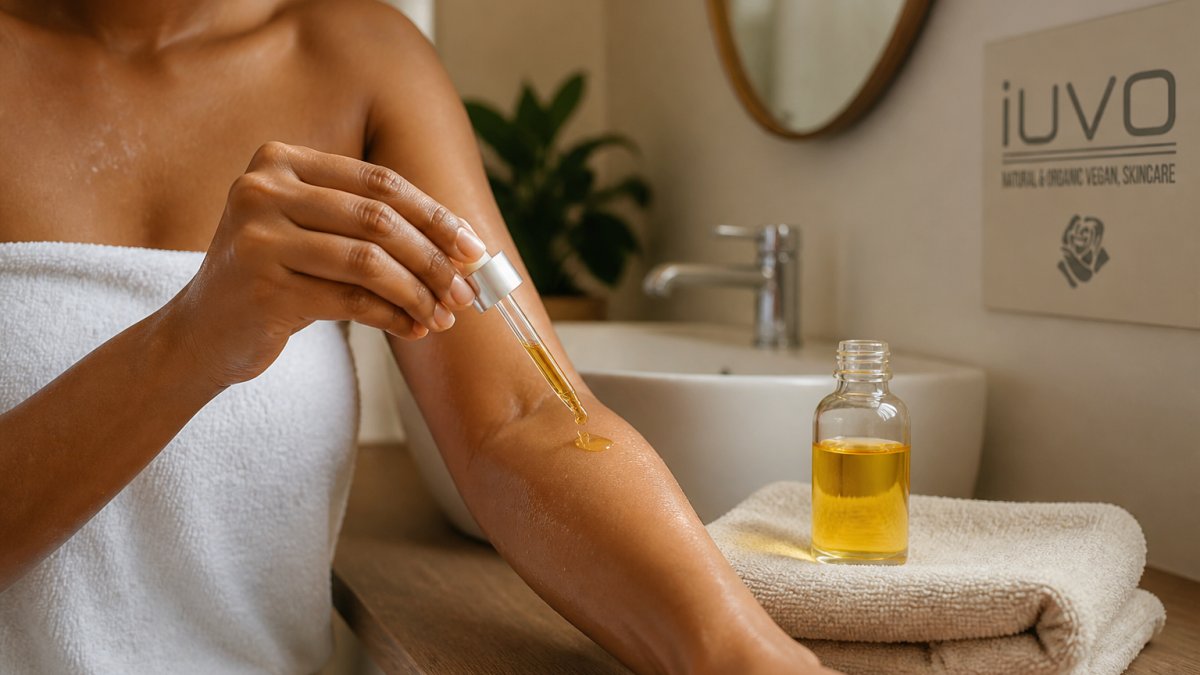
The science of damp skin: why water first, oil second
Water and oil don't mix, that's the whole point. When you apply oil to damp skin, the oil spreads across the water film and forms a continuous lipid layer that slows evaporation. This isn't true emulsification (that requires an emulsifier), but the effect is similar: the oil traps water against the skin surface long enough for the outer layers to absorb it.
Apply oil to bone-dry skin and there's no water to trap. The oil sits on the surface, feels greasy, and delivers far less hydration. The difference between damp and dry application is the difference between sealing moisture in and simply coating the skin.
A common pattern is to pat dry after washing but leave the skin slightly tacky, not dripping, not fully dry. That's the sweet spot.
Step-by-step application
Step 1: Shower or bathe as normal. Pat skin dry with a towel, but leave it slightly damp, aim for skin that feels cool and tacky rather than wet.
Step 2: Warm a small amount of oil between your palms. A few drops go a long way; start with a 10p-sized pool and add more only if needed.
Step 3: Press and sweep, don't rub hard. Work upward from ankles to shoulders in long strokes. Pressing helps the oil spread evenly without dragging on damp skin.
iUVO Skincare - Nourishing Face & Body oil | Deep nourishing great →
Step 4: Give it a minute. Let the oil settle before dressing to avoid transfer onto clothes.
Step 5: Use daily, ideally after every wash. Consistency matters more than quantity.
The L.O.C. method for very dry skin
If your skin is extremely dry, flaky or tight even after oil, a single oil layer may not be enough. Try the L.O.C. method, Liquid, Oil, Cream, a layering protocol borrowed from skin-care practice for compromised barriers:
- Liquid: Apply a humectant-rich lotion or hydrating mist to damp skin. This pulls water toward the skin surface.
- Oil: Press a few drops of body oil over the lotion while it's still tacky. The oil seals the water and humectants underneath.
- Cream: Finish with a richer cream or body butter on the driest areas (elbows, knees, heels) to add another occlusive layer.
The order matters: water-based products first, oil second, cream last. Reversing it means the oil blocks the humectant from reaching the skin.
Common application mistakes
- Applying to dry skin. No water to trap means less hydration and more grease.
- Using too much oil. Start small; you can always add another drop.
- Rubbing rather than pressing. Hard rubbing on damp skin can irritate sensitive skin and disrupt the oil film.
- Skipping the humectant step. Oil alone won't hydrate dehydrated skin, it needs water underneath.
When to Apply Body Oil for the Best Results
Timing decides how well body oil works. The best moment is within a few minutes of washing, while skin is still damp and warm, but the reasons are more specific than most guides let on.
Why warm, damp skin absorbs better
After a bath or shower, the outer layer of skin is hydrated and the surface temperature is slightly elevated. Warmth increases blood flow near the surface and makes the lipid barrier more fluid, so oils spread more evenly and the occlusive film forms faster. Waiting until skin is fully dry means you've already lost the water you wanted to trap, and the oil has nothing to seal in.
A practical rule: apply oil within three minutes of patting dry. If you can't apply straight after washing, splash the area with water first, then apply.
Best times to apply
- Straight after a shower or bath, on damp skin, for maximum moisture lock.
- Before bed, for overnight moisture retention, especially useful if you sleep in a dry, heated room.
- After shaving, on settled skin, using a simple unscented oil. Wait a few minutes after shaving to let any micro-irritation calm.
- Midday top-up on damp skin if you have a physical job or wash your hands often.
When not to apply: before sun exposure. Most plant oils offer no meaningful UV protection, and some (like citrus-derived oils) can increase photosensitivity. If you're heading outdoors, use a dedicated SPF instead.
How often and how much
Daily use after every wash is the baseline for most people. For very dry skin, twice daily (morning and night) is reasonable. A few drops, roughly a 10p-sized pool for each limb, is enough; more oil doesn't mean more hydration, just more residue.
Timing and layering: a simple daily protocol
- Morning: Shower, pat dry, apply lotion to damp skin, then press oil over the top. Give it a minute before dressing.
- Evening: Bath or shower, then the full L.O.C. routine (lotion, oil, cream) on very dry areas. For normal skin, oil alone on damp skin is sufficient.
Choosing Body Oil for Sensitive Skin
Sensitive skin needs a shorter ingredient list, not a longer one. Body oil for sensitive skin should be simple, unscented and free from unnecessary additives.
Our approach at Iuvo Skincare is built around this. Our Rosehip, Jojoba and Grapeseed Face & Body Oil uses three carrier oils with no palm oil, sulphates or parabens, and it's vegan certified. The 100ml bottle is £24.00, and a 30ml travel size is £9.00 if you'd rather try before committing.
What to check before buying any body oil for sensitive skin:
- Fragrance listed near the top of the ingredients
- Essential oils in high concentration
- Added colourings or drying alcohols
- A carrier oil with a high comedogenic rating
- Clear patch-test guidance on the label
On comedogenic ratings: not all oils clog pores equally. Grapeseed and jojoba are generally considered low on the scale, which is why they suit both face and body. Coconut oil sits higher, so it's better saved for very dry areas like elbows and heels.
Key Ingredients to Look For in a Hydrating Body Oil
The ingredient list tells you almost everything. Here's what earns a place in a good hydrating body oil.
Jojoba oil closely mimics the skin's natural sebum, so it balances hydration without clogging pores. Grapeseed oil is light and absorbs quickly, helping maintain the skin's natural moisture barrier. Rosehip oil brings vitamins A and C, supporting skin rejuvenation and improving texture over time. Castor oil is richer and more occlusive, useful for very dry patches and hair.

Also look for:
- Vitamin E, for antioxidant properties that protect the oil and the skin
- Essential fatty acids, which support the lipid barrier
- Short ingredient lists, especially for reactive skin
- Cold-pressed plant-based oils, which retain more of their natural properties
What most guides miss is that carrier oils do the real work. Fancy essential oil blends smell lovely, but the hydration comes from the base. Judge an oil by its first three ingredients, not its fragrance.
Conclusion
The challenge with body oil isn't finding one. It's using it in a way that actually holds moisture in rather than sitting on top of your skin. Apply to damp skin, layer under or over a lotion depending on your skin type, and keep the formula simple if your skin reacts easily.
At Iuvo Skincare, our handmade, vegan-certified oils are built for exactly this: deep nourishment without harsh additives. Our Rosehip, Jojoba and Grapeseed Face & Body Oil at £24.00 suits both face and body, our Jamaican Black Castor Oil at £15.00 handles very dry patches and hair, and our Deep Hydrating Unscented Face & Body Butters at £9.00 offer a richer option for dryness.
Search our store to find the oil that fits your routine, and consider the 30ml size if you want to try it first.
Frequently Asked Questions
Does body oil actually hydrate your skin?
Body oil hydrates by forming a protective seal over the skin that reduces moisture loss, rather than adding water directly. A 2024 review of plant-based cosmetic oils found they can shield the skin surface, reduce moisture loss and help maintain suppleness. For the best results, apply body oil to damp skin after a bath or shower so it traps the water already there. Think of it as a moisture lock rather than a water source.
Is body oil better than body lotion for dry skin?
It depends on what your skin needs. Lotions provide water-based hydration and water-soluble nutrients, while oils mainly provide a protective, lipid-rich seal. If your skin is dehydrated, a lotion first followed by a body oil gives you both. If your skin is dry and rough, an oil rich in essential fatty acids can soften texture and support the lipid barrier. Many people find layering the two works better than choosing one.
Can you use body oil on sensitive skin?
Yes, provided you choose the right formula. Look for short ingredient lists built on non-comedogenic carrier oils such as jojoba and grapeseed, and avoid synthetic fragrance if your skin reacts easily. Patch test on your inner arm for 48 hours before applying all over. A blend of rosehip, jojoba and grapeseed oils is a gentle starting point because jojoba closely resembles the skin's natural sebum and is less likely to clog pores.
Should you apply body oil to wet or dry skin?
Damp skin is best. Apply body oil within a few minutes of leaving the bath or shower, while your skin is still slightly wet. The water on your skin gets sealed in by the oil, which improves hydration retention. On completely dry skin, oil mainly sits on the surface and can feel greasy. Pat rather than rub the skin dry first, then press a few drops of oil over your arms, legs and any rough patches.


