
Buy Organic Handmade Skincare Online: 2026 Guide
by Ian Gabbidon on Sep 28, 2026

Table of Contents
- Why Buy Organic Handmade Skincare Online in 2026
- How to Check Skincare Ingredients Before You Buy
- Vegan Skincare for Sensitive Skin: What Actually Matters
- Certifications and Claims: Spotting Real Proof vs Greenwashing
- Handmade vs Mass-Produced: Consistency, Testing and Safety
- How to Buy Organic Handmade Skincare Online: A Step-by-Step Routine
- DIY vs Professional Handmade Skincare: Which Suits Your Skin?
- Environmental Impact: Packaging, Palm Oil and Carbon
- Conclusion: Buying Organic Handmade Skincare Online With Confidence
- Frequently Asked Questions
Last Updated: September 28, 2026
Why Buy Organic Handmade Skincare Online in 2026
If you're looking to buy organic handmade skincare online, the appeal is easy to understand: fewer harsh additives, gentler formulas, and products made in small batches rather than on an industrial line. At Iuvo Skincare, we've watched this shift firsthand. Our range is 100% vegan certified, handmade in the UK, and built around raw butters and botanical extracts rather than synthetic fillers. Prioritizing these clean, plant-based ingredients extends naturally to the rest of your beauty routine, where choosing organic vegan makeup ensures that your entire regimen remains as ethical and gentle as your skincare.
The catch is that "organic" and "handmade" are not regulated marketing terms in the way most shoppers assume. A jar can say "natural" while still containing synthetic fragrance or preservatives. That gap between the label and the contents is where sensitive skin gets caught out.
Below, we'll show you exactly how to read a label, spot real certification, and build a routine that suits reactive skin, without paying for words that mean nothing.
How to Check Skincare Ingredients Before You Buy
The fastest way to judge any product is to read the INCI list, not the front of the jar. INCI stands for International Nomenclature of Cosmetic Ingredients, the standardised naming system used on cosmetic labels across the UK and EU. It lists ingredients in descending order of concentration, so what appears first is what you're mostly buying.
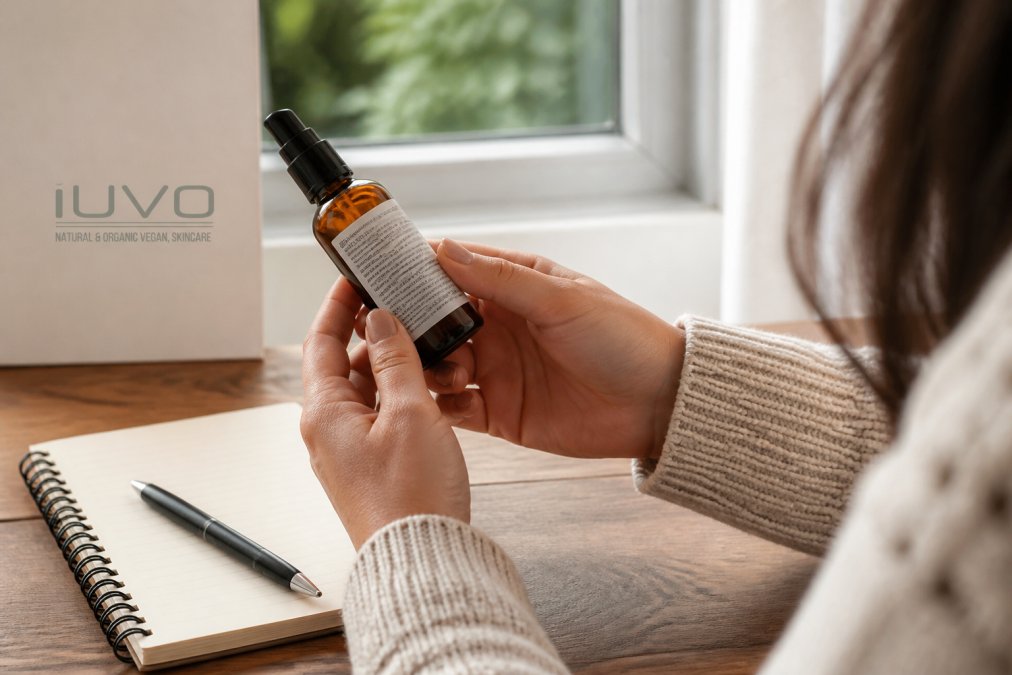
A common mistake is trusting the words "natural" or "botanical" on the front. Those are marketing terms. The INCI list is the legal one. Under the UK Cosmetics Regulation (as retained from EU Regulation 1223/2009), every cosmetic product sold must carry a full ingredient list using INCI names, and the responsible person must hold a Cosmetic Product Safety Report. That report is not public, but its existence is a legal requirement, so a maker who cannot confirm they have one is already outside the rules.
Reading an INCI List Without a Chemistry Degree
You don't need chemistry to scan an INCI list. You need three habits:
- Look at the first five ingredients. These make up the bulk of the formula. If water and filler oils dominate, the "active" botanicals further down are present in tiny amounts. As a rule of thumb, anything after the preservative (usually phenoxyethanol or sodium benzoate) is present at less than 1%, often far less.
- Learn the common irritants by name and by mechanism. Sodium laureth sulfate (SLS) and sodium lauryl ether sulfate (SLES) are surfactants that strip the skin's lipid barrier by disrupting the intercellular cement between corneocytes. That loss of barrier function is what produces tightness, redness, and increased sensitivity to everything applied afterwards. Parabens (methylparaben, propylparaben) are preservatives; the concern for reactive skin is less about toxicity and more about individual sensitisation, which is rare but documented. Synthetic fragrance is the single most common cause of contact allergy in cosmetics, according to dermatology literature, and "parfum" on a label can hide dozens of undeclared compounds.
- Check the last few entries. Preservatives and fragrance allergens sit here. Since 2021, UK labelling must declare 26 specific fragrance allergens individually when they exceed 0.001% in leave-on products or 0.01% in rinse-off products. If you see limonene, linalool, or citronellol listed separately, that is the maker complying with the law, not necessarily a problem, but useful if you know you react to one.
[Iuvo Skincare's Gentle Facial Cleansing Lotion](https://iuvoskincare.com/products/cleanser-face-150ml-linden-blossom) (£8.00) is a useful example: organic avocado oil and organic castor oil lead the formula, with Linden Blossom essential oil for scent rather than synthetic fragrance. The essential oil is declared, and its allergens would be listed if they crossed the threshold.

Additives to Avoid If Your Skin Reacts Easily
Reactive skin tends to flare around a short list of usual suspects, and it helps to know why each one matters rather than avoiding them on reputation alone.
- Sulphates (SLS, SLES). These are effective foaming agents, but they denature proteins in the stratum corneum and strip away the lipids that keep water in. The result is transepidermal water loss, skin feels tight, looks dull, and becomes more permeable to irritants. For anyone with eczema or rosacea, this is the first thing to remove.
- Synthetic fragrance and "parfum". Fragrance mixes can contain dozens of individual chemicals, and the label only has to say "parfum" unless a declared allergen crosses the threshold. If you have ever reacted to a scented product without knowing which note caused it, the culprit is usually one of the 26 regulated allergens, limonene and linalool are the most common.
- Parabens. These are among the most effective preservatives available and have a long safety record, but some sensitive-skin users report irritation. The bigger issue for many shoppers is ethical: parabens are associated with mass-market production, and their presence often signals a longer, more industrial formula.
- Palm oil and its derivatives. Palm oil is not a skin irritant, but it is a common ethical concern. It hides under dozens of INCI names, Elaeis guineensis, sodium palmate, palmitic acid, cetyl alcohol (sometimes), and many emulsifiers. If palm oil-free matters to you, you cannot rely on the front label; you have to scan the INCI list for these names.
If you're unsure where to start, unscented options remove one variable at a time. Iuvo Skincare's Soothing Unscented Face & Body Soaps (£4.00) contain no essential oil at all, which is the simplest way to test whether fragrance is your trigger.
Vegan Skincare for Sensitive Skin: What Actually Matters
Vegan skincare for sensitive skin comes down to two things: what's in the formula and how it was tested. A product can be vegan and still contain a synthetic preservative your skin dislikes. Equally, a gentle formula can still have been tested on animals. You need both boxes ticked.
For sensitive skin specifically, the priority is a short, recognisable ingredient list. Fewer ingredients means fewer chances of a reaction. Look for plant-based formulations built on cold-pressed oils, shea butter, and aloe vera rather than long chains of synthetic emulsifiers.
Iuvo Skincare's Nourishing Day & Night Cream (£34.00) is a good reference point: 64.6% of its ingredients are from organic farming and 98.9% are from natural origin. That transparency is what you're looking for, regardless of brand.

Certifications and Claims: Spotting Real Proof vs Greenwashing
Certification is the only reliable way to tell genuine ethical claims from greenwashing. Anyone can print "cruelty-free" on a label. Very few can show a certificate. When you're deciding where to buy organic handmade skincare online, treat certification logos as the filter.
Vegan Society Certification and What It Covers
The Vegan Society trademark is one of the few vegan claims with real teeth. It confirms no animal-derived ingredients and no animal testing, and it's independently verified rather than self-declared. Iuvo Skincare holds this certification across its range.
Cruelty-Free, Palm Oil-Free and Organic Percentages Explained
These three claims get blurred together constantly, so here's the practical difference:
| Claim | What It Should Mean | How to Verify |
|---|---|---|
| Cruelty-free | No animal testing at any stage | Look for a recognised scheme logo |
| Palm oil-free | No palm-derived ingredients | Check INCI for "Elaeis guineensis" |
| Organic percentage | Share of ingredients from organic farming | Should be stated as a figure, not a word |
If a brand claims "organic" without a percentage, treat it as decoration.
Handmade vs Mass-Produced: Consistency, Testing and Safety
Handmade doesn't automatically mean better, and mass-produced doesn't automatically mean worse. What matters is whether the maker tests and documents each batch.
Small-batch production gives a maker more control over ingredient quality. The trade-off is that handmade products can vary slightly between batches. Reputable makers manage this with written batch records and consistent measuring, which is exactly what you should ask about before buying.
Mass-produced formulas are engineered for uniformity and long shelf life, often using stronger preservative systems. That consistency is real, but it comes with a longer additive list.
How to Buy Organic Handmade Skincare Online: A Step-by-Step Routine
Buying well online is a process, not a single click. Follow these steps and you'll avoid most of the common mistakes.
- Identify your skin type first. Reactive, dry, oily, or combination. This decides everything else.
- Read the INCI list before you look at the price or the packaging.
- Check certification for vegan and cruelty-free claims.
- Start with a cleanser and a moisturiser. Don't buy a full routine at once.
- Patch test each new product for three nights.
- Introduce one product at a time, with a week between each.
- Keep a simple note of what you used and how your skin responded.
A Full Routine Under £100
A complete, gentle routine doesn't need to be expensive. Here's one that covers cleansing, treatment, and hydration:
Nourishing Day & Night Cream | 100ml →
| Step | Product | Price |
|---|---|---|
| Cleanse | Sensitive Face Wash, Rose Geranium | £8.00 |
| Treat | Gentle Vitamin Face Mask, Bentonite & Kaolin | £9.00 |
| Hydrate | Rosehip, Grapeseed & Jojoba Face & Body Oil | £24.00 |
| Moisturise | Nourishing Day & Night Cream | £34.00 |
| Total | £75.00 |
That leaves room to add a bar soap or a second cleanser later.
Trying Before Committing to Full Sizes
The cheapest way to test a brand is to start with its smallest, lowest-cost items. Bar soaps and travel-friendly cleansers let you check how your skin responds before you spend on a full-size moisturiser.
DIY vs Professional Handmade Skincare: Which Suits Your Skin?
DIY skincare is appealing, but it's a false economy for most people. Kitchen-made formulas are hard to preserve safely, and without a preservative system, bacteria grow quickly in anything water-based.
Professional handmade skincare solves this. A maker working in small batches can use proper preservation, measure accurately, and test each batch. You get the short ingredient list of DIY with the safety and consistency of a commercial product.
The honest answer: DIY is fine for a one-off clay mask you'll use immediately. For anything you'll keep for weeks, buy from a maker who documents what they do.
Environmental Impact: Packaging, Palm Oil and Carbon
The environmental case for handmade skincare rests on three things: packaging, palm oil, and production scale. Most competitors wave at these without numbers. Here is what you can actually check, and what the figures tend to look like.
Packaging: What the Numbers Actually Show
The UK generates around 2 million tonnes of packaging waste annually, and cosmetics packaging is a meaningful slice of that. The practical comparison for a skincare buyer is between a typical mass-market plastic bottle and a handmade alternative.
- A standard 200ml plastic moisturiser jar weighs roughly 30-40g of virgin PET or PP. It is technically recyclable, but only about 44% of UK plastic packaging is actually recycled, the rest goes to energy-from-waste or landfill.
- A 100ml amber glass jar weighs around 120-150g. Glass is infinitely recyclable and the UK recycling rate for glass is around 70%, but it is heavier, so transport emissions are higher per unit.
- A bar soap or solid format typically uses a paper wrap or a thin card box, weighing under 10g. This is the lowest-impact option by a wide margin, which is why solid formats have grown quickly in the handmade sector.
The honest conclusion: glass is better than plastic if it is actually recycled, but a solid format beats both. If a maker offers refills, a pouch or a returnable container, that is the single most impactful packaging choice you can support.
Palm Oil: Why "Free From" Is Harder Than It Sounds
Palm oil is the biggest single issue in skincare sourcing. Global demand is linked to deforestation in Southeast Asia, and palm derivatives appear in roughly half of all cosmetic products under names that do not include the word "palm".
Common INCI names to scan for if you want to avoid it:
- Elaeis guineensis (the palm species itself)
- Sodium palmate and sodium palm kernelate (soap bases)
- Palmitic acid and stearic acid (fatty acids, often palm-derived)
- Cetearyl alcohol and cetyl alcohol (emollients, sometimes palm-derived)
- Polysorbate 20, 60, 80 (emulsifiers, usually palm-derived)
"Palm oil-free" is not a regulated claim in the UK, so it is worth checking whether a maker states it explicitly and consistently. Some makers use RSPO-certified sustainable palm instead, which is a different position, not free from palm, but certified against a recognised standard. Both are defensible; the problem is makers who claim "free from" while using palm-derived emulsifiers.
Carbon: What Small-Batch Actually Saves
Small-batch production uses less energy per unit than factory-scale manufacturing, but the difference is smaller than the packaging story and harder to verify. The variables that matter most are:
- Batch size and frequency. A maker producing to order wastes less than one producing to forecast. Made-to-order or small-batch restocks reduce overproduction, which is the largest single source of cosmetic waste.
- Ingredient sourcing distance. A UK-made product using UK-grown botanicals has a shorter supply chain than one using imported oils, though the difference is often smaller than the packaging impact.
- Cold-process vs heat-process. Many handmade soaps and balms are cold-processed, which uses significantly less energy than the heated industrial processes used for mass-market lotions.
What you can actually check: does the maker state where their ingredients come from, whether they produce to order, and what their packaging is made of? If those three answers are clear, you have more information than most mass-market brands provide.
Conclusion: Buying Organic Handmade Skincare Online With Confidence
The hardest part of buying organic handmade skincare online isn't finding products. It's telling genuine makers apart from good marketing. Read the INCI list, check the certification, and start small.
At Iuvo Skincare, we built our range around exactly that principle: 100% vegan certified, free from parabens, sulphates, and palm oil, and handmade in the UK in small batches. Our award-winning Rosehip, Grapeseed & Jojoba Face & Body Oil (£24.00) and Nourishing Day & Night Cream (£34.00) are designed for skin that reacts to everything else.

Search our store and start with a cleanser or a bar soap. Your skin will tell you quickly enough.
Frequently Asked Questions
What should I look for when buying organic skincare online?
Check the full ingredient list rather than the front label, and look for named botanical extracts, cold-pressed oils and a stated organic percentage. Iuvo Skincare's Nourishing Day and Night Cream states 64.6% organic farming ingredients and 98.9% natural origin, which is the kind of specific figure worth trusting. Also confirm the brand is free from parabens, sulphates and synthetic fragrance, and that it holds a recognised certification such as Vegan Society approval.
Are handmade skincare products safer than mass-produced brands?
Not automatically. Handmade products made in small batches can be effective, but safety depends on good manufacturing practice and honest labelling. Look for brands that publish full ingredient lists, state what is excluded, and offer unscented options for reactive skin. Iuvo Skincare's Soothing Unscented Face and Body Soaps contain no essential oil, which suits eczema and psoriasis-prone skin better than heavily fragranced alternatives.
How do I know a brand is genuinely vegan and cruelty-free, not just greenwashing?
Ask for the certification body, not just the claim. Genuine vegan status is usually verified by a third party such as The Vegan Society, and cruelty-free means no animal testing at any stage. Iuvo Skincare is Vegan certified and cruelty-free, and also free from palm oil, SLS, sulphates and parabens. If a brand cannot name its certifier or list its exclusions clearly, treat the claim with caution.
What is the best vegan skincare for sensitive skin that reacts easily?
Start with fewer ingredients and no added fragrance. A gentle cleanser such as Iuvo Skincare's Sensitive Face Wash with Rose Geranium (£8 for 150ml) soothes while removing debris, followed by the Rosehip, Grapeseed and Jojoba Face and Body Oil (£24 for 100ml) to support moisture retention. Patch test on your inner arm for 48 hours before using anything on your face, and introduce one new product at a time.


