
Soothing Cream for Itchy Underarms: Causes & Relief
by Ian Gabbidon on Oct 05, 2026

Table of Contents
- Itchy Underarms Causes: Why Your Armpits Are Itching
- How to Soothe Underarm Irritation: A Step-by-Step Routine
- Choosing a Soothing Cream for Itchy Underarms by Cause
- Antifungal Cream for Underarm Rash: When It Helps
- Hydrocortisone Cream for Itchy Underarms: Safe Use and Limits
- When to See a Doctor for an Underarm Rash
- Preventing Itchy Underarms from Coming Back
- Frequently Asked Questions
Last Updated: October 5, 2026
Itchy Underarms Causes: Why Your Armpits Are Itching
A soothing cream for itchy underarms works best when you know what is causing the itch in the first place. At Iuvo Skincare, we talk to a lot of people with reactive skin, and the same culprits come up again and again. The underarm area is thin, folded, and always warm, which makes it quick to react and slow to settle.
Most itchy underarms causes fall into one of five groups:
- Irritant contact dermatitis from deodorant, antiperspirant, or shaving
- Allergic reaction to fragrance, preservatives, or dyes
- Fungal rash in the warm, damp skin fold
- Friction and trapped moisture from tight clothing
- Dry, cracked skin that has lost its barrier
Here is the part most guides skip: the cause decides the cream. A rich butter helps dry, cracked skin. It will not touch a fungal rash. Get the cause wrong and you can make things worse.
How to Soothe Underarm Irritation: A Step-by-Step Routine
You can calm most mild underarm irritation at home in three steps. Stop the trigger first, then soothe the skin, then keep the area dry and cool. This routine suits everyday itch, redness, and mild rawness.
The underarm is one of the thinnest, most folded areas on the body. That matters for how you apply anything to it. Product sits in the skin fold, absorbs faster than it would on your forearm, and stays in contact with skin for hours. A routine built for that anatomy works better than one copied from general body care.
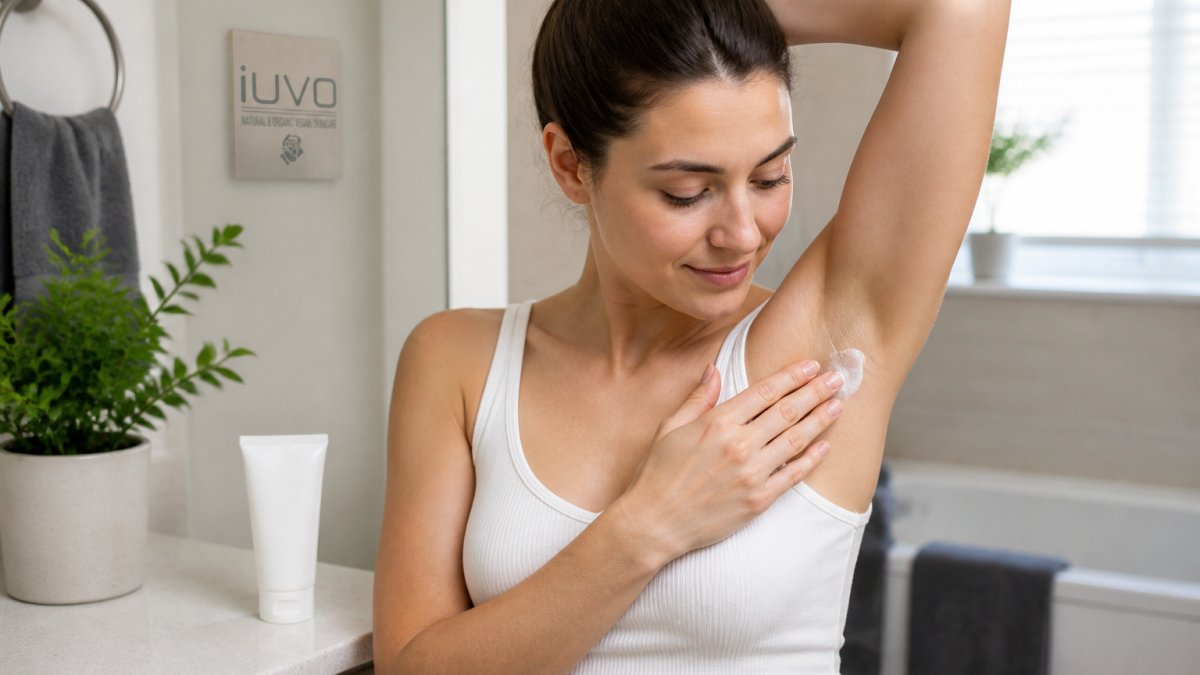
Step 1: Cleanse Gently and Pat Dry
Wash with lukewarm water and a mild, fragrance-free cleanser. Hot water strips the skin barrier and makes itching worse.
Skip harsh soaps, scrubs, and anything with added perfume. Pat the area dry with a soft towel. Do not rub. Rubbing causes friction, which is one of the most common triggers.
Pay attention to the fold itself. Trapped water in the crease keeps the skin damp and feeds irritation. Lift the arm and let the area air-dry for a minute before you dress.
Our NHS guidance on contact dermatitis recommends avoiding known irritants and keeping the skin clean and dry while it heals.
Step 2: Apply a Thin Layer of Soothing Cream
Apply a soothing cream in a thin layer, not a thick one. A heavy layer traps heat and moisture in the skin fold, which can backfire.
A useful guide is the fingertip unit: a strip of cream from the tip of your index finger to the first crease covers roughly two adult palms. Each underarm needs far less than that, so a pea-sized amount per side is usually plenty. More product does not mean faster relief, and on thin skin it mostly sits on the surface. Applying a thin layer consistently helps maintain the skin barrier, though integrating other forms of natural relief for itching can further support long-term comfort and hydration.
Use clean fingertips and let the cream absorb for a minute or two before you dress. If the skin still feels tacky, you have used too much. For daily care, an unscented butter with jojoba oil is a good fit. Jojoba oil helps to prevent itching, and it sits close to the skin's own oils.

Apply once or twice a day while the skin is irritated. Once it settles, once daily is enough to protect the barrier. Reapply only when the skin feels dry, not on a fixed schedule, and never layer cream over a damp underarm.
Step 3: Reduce Friction and Moisture
Choose loose, breathable fabrics like cotton. Tight tops rub the skin and hold sweat against it.
Swap heavy antiperspirants for a gentler option while the skin settles. If you shave, give the area a few days off, and use a sharp razor with a fragrance-free shaving product when you return to it.
Change out of damp clothing after exercise rather than letting sweat dry on the skin. A quick rinse and pat-dry after a workout does more for prevention than any single cream.
Choosing a Soothing Cream for Itchy Underarms by Cause
Match the cream to the cause and you will get relief faster. This is the step most people get backwards. They buy a cream first, then wonder why the itch keeps coming back.
| Likely cause | What you will see | Cream to reach for |
|---|---|---|
| Dry, cracked skin | Flaking, tightness, no rash | Unscented body butter |
| Irritant reaction | Redness, burning after product | Fragrance-free barrier cream |
| Allergic reaction | Small red bumps, intense itch | Stop product, plain emollient |
| Fungal rash | Ring-shaped, scaly, spreading | Antifungal cream |
| Friction | Raw, sore skin folds | Barrier cream plus loose clothing |
If the itch is dry and flaky, a nourishing butter is enough. If it burns right after you apply deodorant, that is an irritant reaction. Stop the product and use a plain emollient.
Ingredients to Look For and Avoid
Look for short ingredient lists with few additives. Carrier oils like jojoba, rosehip, and coconut oil soothe and hydrate without much risk.
Ingredients to look for:
- Jojoba oil, which helps prevent itching
- Rosehip oil, good for scarring and skin repair
- Coconut oil for gentle moisture
- Colloidal oatmeal to calm irritation
- Aloe vera to cool and soothe
Ingredients to avoid:
- Added fragrance and essential oils on broken skin
- Alcohol-based formulas that sting
- Baking soda, a common trigger in natural deodorants
- Parabens, sulphates, and synthetic dyes
Our Unscented Deep Hydrating Face & Body Butter keeps the list short. It has no added scent, which matters when the skin is already angry.
NOURISH AWARD WINNING Deep Hydrating Unscented Face & Body Butters →
Antifungal Cream for Underarm Rash: When It Helps
An antifungal cream for underarm rash helps only when the cause is fungal. A fungal rash usually looks ring-shaped, scaly, and it spreads. It often itches more in warm weather.
Fungal rashes love warm, damp skin folds. The underarm is a perfect home for them. You may also see the same rash under the breast or on the inner thigh.
If you spot these signs, an antifungal cream from a pharmacy is the right first step. A soothing cream alone will not clear it. It may feel nice, but the rash will return.
If the rash has not improved after a week of antifungal treatment, speak to a pharmacist or GP.
Hydrocortisone Cream for Itchy Underarms: Safe Use and Limits
A low-potency hydrocortisone cream can calm itch and redness for a short time. It works by reducing the inflammation that drives the itch, rather than treating whatever is causing it. That distinction matters: if a product or a fungal infection is the trigger, the cream quiets the symptom while the cause keeps going.
The underarm is a higher-risk site for steroid creams than most of the body. The skin is thin, folded, and occluded by clothing, so it absorbs more of what you put on it. That is why short courses and small amounts matter here more than they would on, say, a forearm.
Keep these limits in mind:
- Use the lowest strength you can buy without a prescription
- Apply a thin layer, once or twice a day, and no more
- Limit use to a few days, not weeks, unless a clinician advises otherwise
- Never use it on broken, cracked, or infected skin
- Do not use it to treat a fungal rash, which steroids can worsen
- Do not cover the area with a plaster or tight clothing to "seal it in"
A pea-sized amount per underarm is enough for a thin layer. More product does not speed relief and increases the amount absorbed through thin skin.
Stopping matters as much as starting. If the itch returns within days of finishing a short course, that is a signal the underlying cause is still present, not a reason to restart. Repeated courses without a diagnosis can mask a fungal infection or an allergy and let it progress.
The NHS advice on hydrocortisone is clear that mild steroid creams are for short-term relief. If the itch keeps returning after you stop, the cause is still there.
When to See a Doctor for an Underarm Rash
See a doctor for an underarm rash if it spreads, blisters, oozes, or feels hot and painful. Also seek help if you have a fever, or if the rash does not improve after a week of home care.
Other red flags:
- A lump or swelling in the armpit
- Skin that cracks and bleeds
- Intense pain rather than itch
- A rash that keeps coming back
A GP can check for fungal infection, eczema, or another cause. Getting the right diagnosis saves weeks of guesswork.
Preventing Itchy Underarms from Coming Back
Prevention comes down to three habits: keep the skin dry, cut friction, and use gentle products. Once you know your triggers, you can avoid most flare-ups.
Try these steps:
- Switch to a fragrance-free deodorant
- Shave less often, or use a sharp razor
- Wear loose cotton tops
- Shower after exercise and dry well
- Moisturise daily to protect the skin barrier
- Patch-test new products before full use
Our Unscented Antiperspirant Deodorant is made without essential oils. It suits sensitive underarms that react to scented products. It also comes in a refillable straw applicator you can recycle.

For a full routine, pair it with the Unscented Soothing Face & Body Soap. It has no added essential oil, so it works for eczema and psoriasis-prone skin.
Frequently Asked Questions
What can cause itchy underarms?
Itchy underarms usually come from irritation, allergy, or infection. Common triggers include sweat and friction in the skin folds, fragrances and preservatives in deodorants, and fungal overgrowth in warm, damp conditions. Eczema and psoriasis can also affect the armpits. A soothing cream for itchy underarms helps calm the skin, but if the itch keeps returning you need to identify the cause. Switching to fragrance-free products and keeping the area dry often resolves mild cases.
What is the best cream for armpit itching?
There is no single best cream because the right choice depends on the cause. For simple irritation, a fragrance-free soothing cream with ingredients like aloe vera, oatmeal, or jojoba oil can relieve itching and support the skin barrier. If a fungal rash is likely, an antifungal cream is needed. For short-term relief of inflammation, a low-potency hydrocortisone cream may help. Always patch test first and stop using any product that burns or worsens the rash.
How can I soothe an itchy underarm rash at home?
Start by cleansing gently with lukewarm water and a mild, unscented soap, then pat the area dry. Apply a cool compress for a few minutes to reduce redness and itching. Follow with a thin layer of soothing cream, and avoid deodorant, shaving, and tight clothing until the skin settles. Keep the area dry and wear loose cotton clothing. If the rash does not improve within a week or gets worse, seek medical advice.
When should I seek medical advice for an itchy underarm rash?
See a doctor if the rash is severe, painful, or spreading, or if you notice pus, open sores, or a foul smell. Persistent itching that lasts more than two weeks, keeps coming back, or does not respond to over-the-counter treatment also needs assessment. A pharmacist can advise on antifungal or hydrocortisone creams for mild cases, but a GP can confirm the cause and rule out conditions such as eczema, psoriasis, or a bacterial infection.
Itchy underarms rarely need anything complicated. They need the right cream for the right cause, applied with care. Iuvo Skincare makes handmade, vegan-certified products free from parabens, sulphates, and palm oil, so you can soothe reactive skin without harsh additives. Our unscented butters and deodorant are built for sensitive underarms, and our family-run team is always happy to help you choose. Search our store and find a gentle routine that keeps your skin calm.


