
Best Organic Botanical Skincare for Face: 2026 Guide
by Ian Gabbidon on Oct 07, 2026

Table of Contents
- Why Organic Botanical Skincare for Face Deserves a Place in Your Routine
- Quick Comparison: Face-Only Organic Botanical Products
- How to Choose Organic Skincare: Five Checks Before You Buy
- Cleansers and Face Washes for Every Skin Type
- Organic Face Cream and Facial Oil: Locking In Hydration
- Toners, Mists and Clay Masks for Weekly Care
- Organic Skincare for Sensitive Skin: What to Avoid and What Helps
- Building a Natural Facial Skincare Routine That Sticks
- Conclusion: Choosing Organic Botanical Skincare for Face
- Frequently Asked Questions
Last Updated: October 7, 2026
Why Organic Botanical Skincare for Face Deserves a Place in Your Routine
Organic botanical skincare for face is a facial care approach built on plant-derived ingredients grown and processed to certified organic standards, formulated to support the skin barrier without synthetic additives. At Iuvo Skincare, we make every face product by hand in small batches. The shift matters because facial skin is thinner and more permeable than the body, so what you cleanse and moisturise with sits against a reactive surface all day. Below, we break down which products suit which skin type, how to read a certification claim, and where most natural ranges quietly fall short.
Quick Comparison: Face-Only Organic Botanical Products
Every product below is made for the face specifically, not stretched from a body formula. Prices are per full-size unit.
Product |
Price |
Key Botanicals |
Best For |
|---|---|---|---|
£8.00 |
Rose Geranium |
Reactive, eczema-prone skin |
|
Gentle Facial Cleansing Lotion, Linden Blossom |
£8.00 |
Avocado oil, Castor oil |
Dry, tight-feeling skin |
Detoxifying Face Wash, Activated Charcoal |
£8.00 |
Coconut, Charcoal |
Oily, congested, acne-prone skin |
Balancing Toner, White Lotus |
£8.00 |
White Lotus |
All skin types, post-cleanse |
Nourishing Day & Night Cream |
£34.00 |
Shea butter, Aloe Vera, Rose Water |
Dry and mature skin |
Rosehip, Grapeseed & Jojoba Face & Body Oil |
£24.00 |
Rosehip, Jojoba, Grapeseed |
Barrier repair, facial massage |
Gentle Vitamin Face Mask, Bentonite & Kaolin |
£9.00 |
Bentonite, Kaolin clay |
Sensitive, dry, mature skin |
Deep Cleanse Detoxifying Clay Mask |
£9.00 |
Charcoal, Bentonite |
Blackheads, oily T-zone |
Facial Pads, Organic Cotton & Bamboo |
£3.50 |
n/a |
Replacing disposable wipes |
How to Choose Organic Skincare: Five Checks Before You Buy
Choosing organic skincare comes down to five checks: the ingredient list, the certifying body, the preservative system, the concentration of active botanicals, and whether the formula suits your skin type. Most shoppers only do the first. That is why so many "natural" purchases end up irritating sensitive skin anyway. The sections below work through each check, and then explain what the headline botanicals actually do once they are on your face.
Read the Ingredient List, Not the Front Label
The front label is marketing. The ingredient list is regulated. Ingredients must be declared in descending order of concentration, so anything appearing after the preservative is present in tiny amounts. A serum that lists its star botanical near the bottom is a scent, not a treatment. Look for base oils and butters near the top, and treat "parfum" as a catch-all that can hide dozens of undeclared compounds.
A practical test: if the botanical named on the front appears after phenoxyethanol or sodium benzoate on the back, the formula is being sold on the idea of that ingredient rather than its dose. That is not automatically a bad product, but it should change what you expect from it.
Check the Certification Body Behind the Claim
"Organic" is not a protected term on its own in cosmetics, so the certification body is what gives the word weight. Look for a named certifier on the packaging and verify it. The Soil Association organic beauty standards set out what a certified product may and may not contain, including restrictions on synthetic preservatives and petrochemical ingredients. A brand that lists percentages of organic and natural origin, as we do on our Nourishing Day & Night Cream at 64.6% organic and 98.9% natural origin, is showing its working rather than asking you to trust a logo.

Nourishing Day & Night Cream | 100ml | Face | Butter Cream
Understand the Preservative System
A preservative-free face cream is a contradiction in terms unless it is anhydrous, that is, contains no water. Any water-based product needs a preservative system, or it will grow mould and bacteria within weeks. The question is not whether preservatives are present but which ones. Broad-spectrum systems such as phenoxyethanol, sodium benzoate and potassium sorbate are widely used in certified organic formulas because they are permitted under organic standards at low concentrations. What you are avoiding is the older generation of parabens and formaldehyde-releasing preservatives, which most certified ranges exclude by rule.
Judge the Concentration of Active Botanicals
This is the check almost nobody performs, and it is where the ingredient-evidence gap opens up. A botanical can be present at 0.1% as a scent or at 5% as a functional active, and the label will not always tell you which. Three signals help:
- Position on the list. Ingredients are ranked by concentration, so a botanical sitting above the preservative is doing more work than one sitting below it.
- Stated percentages. Brands that publish figures such as "5% rosehip oil" are giving you something to compare. Brands that do not are asking you to take the front label on trust.
- The base formula. In a cream, the first three or four ingredients are usually water, an oil or butter, an emulsifier and a humectant. If a botanical appears in that group, it is a structural part of the formula, not a garnish.
Match the Formula to Your Skin Type
The final check is the one most shoppers skip because it requires honesty about their own skin. A rich shea-based cream that rescues dry, mature skin will sit heavily on an oily T-zone. A light grapeseed-and-jojoba oil that suits combination skin will not be enough for someone whose barrier is compromised. The product comparison above maps each formula to a skin type for that reason, and the sections that follow explain the mechanism behind each match.
What the Headline Botanicals Actually Do
Broad "natural" claims are easy to make and hard to assess. Ingredient-level evidence is more useful, so here is what the key botanicals in this range are generally understood to do, and what that means for how you use them.
- Rosehip oil carries natural vitamin A precursors and vitamin C, and is widely used in facial oils for regeneration and evening out tone. It is a dry oil that absorbs quickly, which is why it suits barrier-repair blends rather than heavy night creams.
- Jojoba is technically a liquid wax, not an oil, and its structure closely resembles human sebum. That is the mechanism behind its reputation for hydrating without clogging pores, and why it appears in formulas aimed at combination and acne-prone skin.
- Grapeseed oil is light and high in linoleic acid, which makes it a common choice for oily and acne-prone skin because it is less likely to feel occlusive than heavier carrier oils.
- Shea butter is rich in stearic and oleic acids and forms a semi-occlusive film that slows water loss. That is the mechanism behind its use in dry and mature skin formulas, and also the reason it can feel heavy on oily skin.
- Aloe vera is a humectant, meaning it draws water into the upper layers of the skin rather than sealing it in. It works best alongside an occlusive ingredient, not on its own.
- White lotus and rose geranium are used primarily for their calming and aromatic properties. They are pleasant and generally well tolerated, but they are not the workhorses of a formula, treat them as supporting ingredients, not actives.
- Bentonite and kaolin clays absorb excess oil and surface impurities. Kaolin is the gentler of the two, which is why it appears in masks aimed at sensitive and dry skin, while bentonite is the stronger absorber used in detox masks for oily and congested skin.
Cleansers and Face Washes for Every Skin Type
The right cleanser is the one that leaves your skin comfortable rather than squeaky. Stripping cleansers remove the lipids that hold water in, and sensitive skin reacts within days. Our full cleanser range sits at £8.00 for 50ml.
Matching the Cleanser to Your Skin Type
- Sensitive or eczema-prone: Sensitive Face Wash, Rose Geranium soothes while it cleans, no fragrance load beyond the essential oil itself.
- Dry or tight: Gentle Facial Cleansing Lotion, Linden Blossom uses organic avocado and castor oils to leave a moisturising film.
- Oily or congested: Detoxifying Face Wash, Activated Charcoal lifts buildup with coconut and charcoal.
- Balanced but dull: Face Wash, Cedarwood Blend warms the skin with cedarwood, frankincense, neroli and sandalwood.
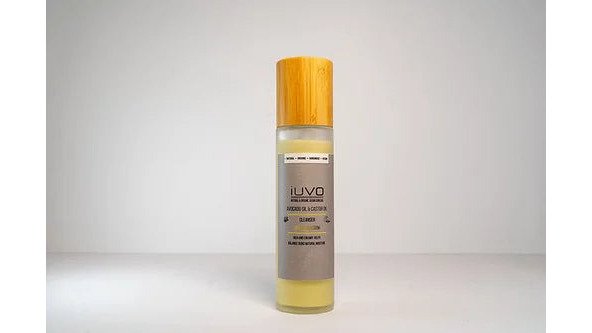
Gentle Facial Cleansing Lotion | FACE | Linden Blossom
Organic Face Cream and Facial Oil: Locking In Hydration
An organic face cream seals in water; a facial oil reinforces the barrier that keeps it there. You need one of each if your skin runs dry, and you can layer them in either order depending on how heavy you like the finish. Our Nourishing Day & Night Cream at £34.00 for 100ml pairs unrefined shea butter with aloe vera, rose geranium and rose water. It absorbs without the greasy residue that puts people off rich creams.


For barrier repair, the Rosehip, Grapeseed & Jojoba Face & Body Oil at £24.00 brings three carrier oils that behave differently on skin. Grapeseed is light and fast-absorbing. Jojoba closely mimics the skin's own sebum, so it hydrates without clogging pores. Rosehip carries vitamins A and C and supports regeneration. It is also unscented, which matters if fragrance is your trigger.
Toners, Mists and Clay Masks for Weekly Care
A toner rebalances pH after cleansing; a clay mask does the deep work once or twice a week. Both are optional, but together they close the gap between a basic routine and one that visibly changes texture. The Balancing Toner, White Lotus at £8.00 calms skin post-cleanse and can be misted over makeup during the day to refresh without disturbing it.
For masks, the split is simple. Gentle Vitamin Face Mask, Bentonite & Kaolin at £9.00 suits sensitive, dry and mature skin, with mineral-rich clays that nourish rather than strip. Deep Cleanse Detoxifying Clay Mask, Activated Charcoal at £9.00 targets blackheads and acne-prone skin, absorbing excess oil and impurities. Use either once weekly, and skip the mask entirely on days your skin feels reactive.
Nourishing Day & Night Cream | 100ml | Face | Butter Cream →
Organic Skincare for Sensitive Skin: What to Avoid and What Helps
Organic skincare for sensitive skin helps most when it removes the common triggers rather than adding more botanicals. Fragrance, essential oils at high concentration, sulphates, parabens and drying alcohols cause most reactions. The NHS guidance on eczema and emollients recommends fragrance-free emollients for dry and eczema-prone skin, which is a useful benchmark even when you are buying a scented botanical product.
But before you can judge whether a product is right for reactive skin, you need to know what its claims actually mean. The words on the front of a botanical face cream are not interchangeable, and the differences matter most to the people who react to the wrong formula.
Certified Organic, Natural, Wildcrafted and Plant-Derived: What Each Claim Means
These four terms get used as if they were synonyms. They are not.
- Certified organic means an independent certifier has inspected the product against a published standard. In practice this covers the agricultural origin of the botanical ingredients, the permitted preservative and surfactant list, and the proportion of organic content. The certifier is named on the packaging, and the certificate can be checked. This is the strongest claim of the four because it is verified by someone other than the brand.
- Natural has no single legal definition in cosmetics. It generally means the formula avoids a list of synthetic ingredients the brand has chosen to exclude, but the list is the brand's own. A "natural" face wash can still contain high levels of essential oils, which are a common trigger for reactive skin.
- Wildcrafted describes botanicals harvested from the wild rather than cultivated. It says something about how the plant was grown, not about how the finished product was formulated or preserved. A wildcrafted ingredient can sit in a formula full of synthetic additives.
- Plant-derived is the loosest of the four. It means the ingredient originated from a plant at some point in its processing, but the final molecule may be chemically identical to a synthetic version. It is accurate and almost meaningless as a guide to how gentle a product will be.
How to Verify a Claim in Practice
Verification is a five-minute job if you know where to look.
- Find the certifier's name on the packaging. If there is no named body, there is no certification to verify.
- Check the certifier's own product database. Most certifiers publish a searchable list of certified brands and products. If the product is not there, the claim is the brand's own.
- Look for a stated percentage of organic content. A figure such as "64.6% organic" is checkable against the certifier's records. A vague "made with organic ingredients" is not.
- Read the preservative and surfactant lines. Certified organic standards restrict which ones are permitted, so their presence or absence tells you whether the formula is likely to meet the standard.
- Cross-check the allergen declaration. Fragrance allergens above the regulatory threshold must be listed individually. If a product lists several, that is useful information for reactive skin regardless of how organic the rest of the formula is.
Patch Testing and Essential-Oil Safety
Patch testing is not optional for reactive skin. Apply a small amount behind the ear or on the inner forearm, wait 48 hours, and check for redness, itching or swelling before using it on your face. Essential oils are natural but not inert. Rose geranium, linden blossom and cedarwood are generally well tolerated, but any of them can trigger a reaction in a person who is sensitised to it. If you are undergoing cancer treatment or managing a diagnosed skin condition, check with your clinician before introducing a new botanical or stick to unscented.
A common pattern with essential-oil sensitivity is that the reaction builds over repeated use rather than appearing on first contact. That is why a product can feel fine for a fortnight and then start to sting. If that happens, stop using it and reintroduce one product at a time so you can identify the trigger.
Building a Natural Facial Skincare Routine That Sticks
A natural facial skincare routine works when it is short enough to repeat daily. Four steps, morning and evening, cover almost everyone.
- Cleanse: Face wash or cleansing lotion, lukewarm water, no scrubbing.
- Tone: Balancing toner on a reusable organic cotton and bamboo facial pad at £3.50 for a pack of three.
- Treat: Face oil on damp skin, or a clay mask once a week.
- Moisturise: Day and night cream to seal everything in.
The reusable pads replace disposable wipes. Wash them by hand or in a small bag in the machine.
Conclusion: Choosing Organic Botanical Skincare for Face
Building a routine that respects reactive skin takes patience, and the trial-and-error phase is where most people give up. Every face product is handmade in small batches, 100% vegan certified, cruelty-free, and free from nuts, palm oil, SLS, sulphates and parabens. Our Nourishing Day & Night Cream and Rosehip, Grapeseed & Jojoba Face & Body Oil are the two products we would start with, and both are backed by our triple award-winning range. Search our store to build a routine that suits your skin type.
Frequently Asked Questions
What does botanical skincare mean?
Botanical skincare uses ingredients derived from plants: oils, butters, floral waters, herbs and essential oils rather than mineral oils or synthetic actives. Organic botanical skincare goes further, meaning a defined share of those plant ingredients was grown to organic farming standards. On a face cream label you might see shea butter, aloe vera, rose water and rose geranium. The term describes the source of the ingredients, not automatically the certification, so always check the small print on the pack.
How can I tell whether facial skincare is genuinely organic?
Look for two things: a certification logo and a stated percentage. A genuine organic face cream will name its certifying body and declare how much of the formula comes from organic farming. One example states 64.6% of total ingredients from organic farming and 98.9% from natural origin. If a product says organic on the front but the ingredient list is mostly synthetic, treat the claim as marketing rather than certification.
Is botanical skincare suitable for sensitive skin?
It can be, but plant-derived does not automatically mean gentle. Essential oils and some botanical extracts can irritate reactive or eczema-prone skin. Choose fragrance-light formulas, avoid known irritants, and patch test on your inner arm for 24 hours before using anything on your face. A dedicated sensitive face wash with rose geranium, or a gentle cleansing lotion with avocado and castor oils, is a sensible starting point for reactive skin.
What ingredients should I look for in organic face skincare?
Prioritise unrefined shea butter, aloe vera, rose water, jojoba, rosehip and grapeseed oils, all of which support hydration and the skin barrier. For sensitive or dry skin, look for soothing botanicals such as linden blossom or white lotus. Check that the formula is free from parabens, sulphates and palm oil if those matter to you. A short, readable ingredient list is usually a better sign than a long one full of unpronounceable additives.
How do I build a simple routine with natural facial skincare?
Keep it to four steps. Cleanse morning and evening with a gentle face wash or cleansing lotion, then sweep on a balancing toner while skin is still damp. Apply a nourishing day and night cream to seal in moisture, and add a face and body oil two or three evenings a week for extra hydration. A clay mask once a week handles congestion.


