
Best Nourish London Alternatives: 2026 Natural Guide
by Ian Gabbidon on Oct 09, 2026

Table of Contents
- Why People Look for Nourish London Alternatives
- How We Chose These Alternatives (And What We Left Out)
- Quick Comparison: What Each Alternative Costs
- Natural Skincare Brands That Suit Reactive Skin
- Vegan Skincare Brands With Real Certifications
- Natural Skincare for Sensitive Skin: Matching Product to Skin Type
- Affordable Natural Skincare: Building a Full Routine Under £100
- Product-by-Product Swaps for a Nourish London Routine
- What to Check Before You Switch Brands
- Common Mistakes When Choosing Alternatives
- Conclusion: Which Alternative Fits Your Skin and Budget
- Frequently Asked Questions
Last Updated: October 9, 2026
Why People Look for Nourish London Alternatives
Shoppers searching for the best Nourish London alternatives usually share one of three motivations: a product has been discontinued, the price no longer fits the budget, or a sensitive-skin flare-up has forced a rethink. This guide from Iuvo Skincare compares what actually matters when you switch: ingredients, certifications, skin-type suitability and the real cost of a full routine.
Nourish London built its reputation on certified organic, vegan formulations, and that reputation is deserved. But a single brand cannot suit every skin type, every budget or every ethical priority. Some people need fragrance-free formulas. Others want handmade products in smaller batches. Others simply want a full routine that costs less than a weekly shop.
The best Nourish London alternatives are not necessarily cheaper or newer. They are the ones that match your skin barrier, your sensitivities and your values. Below, we break down how we chose the options in this guide, what each one costs, and which product swaps make sense for a typical routine.
How We Chose These Alternatives (And What We Left Out)
We judged every option against four criteria: ingredient transparency, certification, suitability for reactive skin, and value for money across a full routine. A brand that publishes its full ingredient list and holds a recognised vegan certification ranks higher than one making vague "natural" claims.
Here is what we looked for:
- Full ingredient disclosure on every product page, not just marketing claims
- Vegan and cruelty-free certification from a recognised body, not a self-declared badge
- Formulations built for sensitive, dry or reactive skin, since that is the most common reason people leave a brand
- Price per product and per routine, so you can see the true cost of switching
What we left out matters just as much. We excluded brands that hide behind "clean beauty" language without listing ingredients. We also excluded anything we could not verify. If a company claims sustainability but publishes no evidence, it does not belong in a serious comparison.
Quick Comparison: What Each Alternative Costs
Cost is the fastest way to narrow the field. The table below shows a realistic full-routine price across the options in this guide, based on a cleanser, toner, moisturiser and treatment product.
Routine Step |
Iuvo Skincare |
Typical Certified Organic Brand |
Typical High-Street Natural Brand |
|---|---|---|---|
Cleanser |
£8.00 |
£18-£24 |
£6-£10 |
Toner |
£8.00 |
£16-£22 |
£5-£9 |
Moisturiser |
£34.00 (100ml) |
£28-£38 |
£10-£16 |
Treatment oil or mask |
£9.00-£24.00 |
£20-£30 |
£8-£14 |
Full routine total |
£59-£74 |
£82-£114 |
£29-£49 |
The pattern is consistent: certified organic ranges sit at the top of the price band, high-street natural brands sit at the bottom, and handmade small-batch brands land in the middle. That middle ground is where most sensitive-skin shoppers end up, because it balances ingredient quality against a routine that does not cost a fortune to maintain.
Natural Skincare Brands That Suit Reactive Skin
Reactive skin narrows your options fast. Fragrance, essential oils, alcohol and strong preservatives are the usual triggers, and a formula can be certified organic and still set off a flare-up.
For reactive skin, the priority is a short, transparent ingredient list. Iuvo Skincare's Gentle Facial Cleansing Lotion uses Organic Avocado Oil and Organic Castor Oil with a soft Linden Blossom scent to soothe and calm, and the Sensitive Face Wash with Rose Geranium is built specifically for skin that reacts easily. Both are £8.00 for 150ml, which makes trial-and-error far less painful on the wallet.
The Deep Hydrating Unscented Face & Body Butter at £9.00 is the one to reach for if fragrance is your trigger. It is unscented by design and blends Coconut Oil for soothing, Jojoba Oil to help prevent itching, Rosehip Oil for scarring, and Neem Oil. For anyone managing eczema-prone or very dry skin, an unscented butter removes the single most common cause of irritation.

A common mistake is switching your entire routine at once. If something flares, you will not know which product caused it.
Vegan Skincare Brands With Real Certifications
Vegan claims are everywhere, and that is exactly the problem. In the UK, "vegan" is not a legally defined term for cosmetics, so a brand can print it on a jar without proving anything. Certification is the only reliable signal, but only if you know what each scheme actually verifies.
There are three distinct claims shoppers routinely confuse, and they are not interchangeable:
- Vegan, no animal-derived ingredients anywhere in the formula. This says nothing about testing.
- Cruelty-free, no animal testing at any stage, including by suppliers and contract manufacturers. This says nothing about ingredients, so a cruelty-free product can still contain beeswax, lanolin, carmine or honey.
- Vegetarian, may contain animal by-products such as beeswax or lanolin, but no slaughtered-animal ingredients.
A product can be vegan and not cruelty-free, or cruelty-free and not vegan. If both matter to you, you need evidence of both.
How to verify a vegan claim
The most widely recognised vegan mark on cosmetics is the Vegan Trademark, administered by The Vegan Society. To carry it, a product must contain no animal-derived ingredients and no animal testing may have been carried out on the finished product or its ingredients by the company or on its behalf. The mark is licensed per product, not per brand, so check the individual item rather than the website banner.
Other marks you may see include V-Label, an international scheme with separate vegan and vegetarian categories, and Cruelty Free International's Leaping Bunny, which is a cruelty-free scheme rather than a vegan one. A brand holding Leaping Bunny has verified its supply chain against animal testing, but that tells you nothing about whether the formula contains beeswax.
If a company will not name the certifying body, the product registration number, or the scope of the certification, treat the claim as unverified until it does. "Certified vegan" with no body named is marketing, not certification.
What certification does not cover
Certification confirms the absence of animal ingredients and, where relevant, animal testing. It does not confirm that a product is gentle, fragrance-free, non-comedogenic or suitable for reactive skin. A certified vegan formula can still contain essential oils, alcohol or preservatives that trigger a flare-up.
That distinction matters for anyone choosing alternatives on ethical grounds and assuming the ethical badge doubles as a safety badge. It does not. Check the INCI list separately for your known triggers.
The ingredient list is the other half of the check
Even with a valid mark, read the full INCI list, because certification and formulation quality are separate questions. Common animal-derived ingredients to look for if vegan status is your priority include beeswax (cera alba), lanolin, carmine (CI 75470), shellac, honey and propolis. Common preservatives and surfactants that shoppers often want to avoid for other reasons include parabens, sulphates (look for sodium lauryl sulfate and sodium laureth sulfate) and palm-derived ingredients, which may be listed as elaeis guineensis oil or sodium palmate.
Iuvo Skincare holds vegan certification across its range and is cruelty-free, with no animal testing at any stage. The formulations also avoid parabens, sulphates, palm oil and nuts, which covers most of the ingredients sensitive-skin shoppers ask about. For anyone dealing with fragile skin during cancer treatment, that transparency is not a marketing point. It is the whole reason to choose one brand over another.
Natural Skincare for Sensitive Skin: Matching Product to Skin Type
Matching product to skin type beats brand loyalty every time. Sensitive skin needs calming ingredients and no fragrance. Dry skin needs occlusive butters and oils. Combination skin needs lighter textures that will not clog pores.
Here is how the main skin types map onto the products in this guide:
Skin Type |
Cleanser |
Moisturiser |
Treatment |
|---|---|---|---|
Sensitive or reactive |
Sensitive Face Wash, Rose Geranium |
Deep Hydrating Unscented Butter |
Balancing Toner, White Lotus |
Dry or mature |
Nourishing Day & Night Cream |
Rosehip, Grapeseed & Jojoba Oil |
|
Combination or congested |
Detoxifying Face Wash, Charcoal |
Nourishing Day & Night Cream |
Gentle Vitamin Face Mask |
Eczema-prone |
Gentle Facial Cleansing Lotion |
Deep Hydrating Unscented Butter |
Unscented Face & Body Oil |
The Nourishing Day & Night Cream at £34.00 for 100ml is the workhorse here. It uses Organic Unrefined Shea Butter, Aloe Vera, Rose Geranium and Rose Water, and 98.9% of its ingredients are from natural origin, with 64.6% from organic farming. It absorbs without leaving a greasy film, which is the usual complaint about rich creams.

For congested skin, the Gentle Vitamin Face Mask with Bentonite and Kaolin at £9.00 balances oils and removes impurities while staying gentle enough for dry and mature skin. That combination is rare: most clay masks strip sensitive skin.
NOURISH AWARD WINNING Rosehip, Grapeseed & Jojoba Face & Body Oil - 100ml →
Affordable Natural Skincare: Building a Full Routine Under £100
A full natural routine does not have to cost more than a night out, but "affordable" only means something if you compare like with like. The headline price on a product page tells you very little. What matters is cost per use, cost per 100ml, and how long a product actually lasts before you have to repurchase.
The three numbers that decide value
- Price per 100ml (or per 100g). A 30ml serum at £24 works out at £80 per 100ml. A 100ml moisturiser at £34 works out at £34 per 100ml. The smaller bottle is not automatically the cheaper product.
- Cost per use. A 150ml cleanser used twice a day at roughly 2ml per wash lasts about 37 days, so an £8 bottle costs about 22p per wash. A £24 cleanser at the same size and dose costs about 65p per wash, roughly three times as much for the same step.
- Repurchase frequency. A product you replace every six weeks costs more per year than one you replace every four months, even if the unit price is higher.
Category benchmarks to compare against
Across the natural and organic segment, a realistic full routine of cleanser, toner, moisturiser and one treatment product sits in three broad bands:
Routine Step |
Budget natural |
Mid-range natural |
Certified organic premium |
|---|---|---|---|
Cleanser |
£6-£10 |
£12-£18 |
£18-£24 |
Toner |
£5-£9 |
£10-£16 |
£16-£22 |
Moisturiser |
£10-£16 |
£20-£30 |
£28-£38 |
Treatment oil or mask |
£8-£14 |
£15-£22 |
£20-£30 |
Full routine total |
£29-£49 |
£57-£86 |
£82-£114 |
Certified organic ranges sit at the top of the band because certification, smaller batch sizes and organic raw materials all carry a cost. High-street natural brands sit at the bottom, often because they use larger production runs and simpler formulations. Handmade small-batch brands land in the middle, which is where most sensitive-skin shoppers end up, because it balances ingredient quality against a routine that does not cost a fortune to maintain.
A worked example under £100
Here is how a complete four-step routine adds up using Iuvo Skincare products:
- Cleanse: Gentle Facial Cleansing Lotion, £17.00 for 150ml, about 22p per wash
- Tone: Balancing Toner with White Lotus, £8.00
- Moisturise: Nourishing Day & Night Cream, £34.00 for 100ml, £34 per 100ml
- Treat: Rosehip, Grapeseed & Jojoba Face & Body Oil, £24.00
- Total: £83.00 for a full routine
Swap the moisturiser for the £9.00 Deep Hydrating Unscented Butter and the total drops to £68.00. Add the £4.00 handmade essential oil soaps and you have covered face and body for less than the price of a single premium serum elsewhere.

Where the money actually goes
Two products usually eat the budget: the moisturiser and the treatment oil or serum. If you need to cut costs without cutting quality, cut the treatment step first, because a well-formulated moisturiser does most of the barrier work on its own. Cutting the cleanser is a false economy, a harsh cleanser that strips the barrier creates problems the rest of the routine then has to fix.
Buying a larger size is only cheaper if you will finish it before it expires. Natural and organic formulas often use gentler preservative systems, so they tend to have shorter shelf lives once opened. Check the period-after-opening symbol (the open-jar icon with a number of months) before you trade up to a bigger bottle.
Product-by-Product Swaps for a Nourish London Routine
Swapping product by product is far safer than replacing everything at once. If you already have a routine you like, keep the steps and change only the formulas.
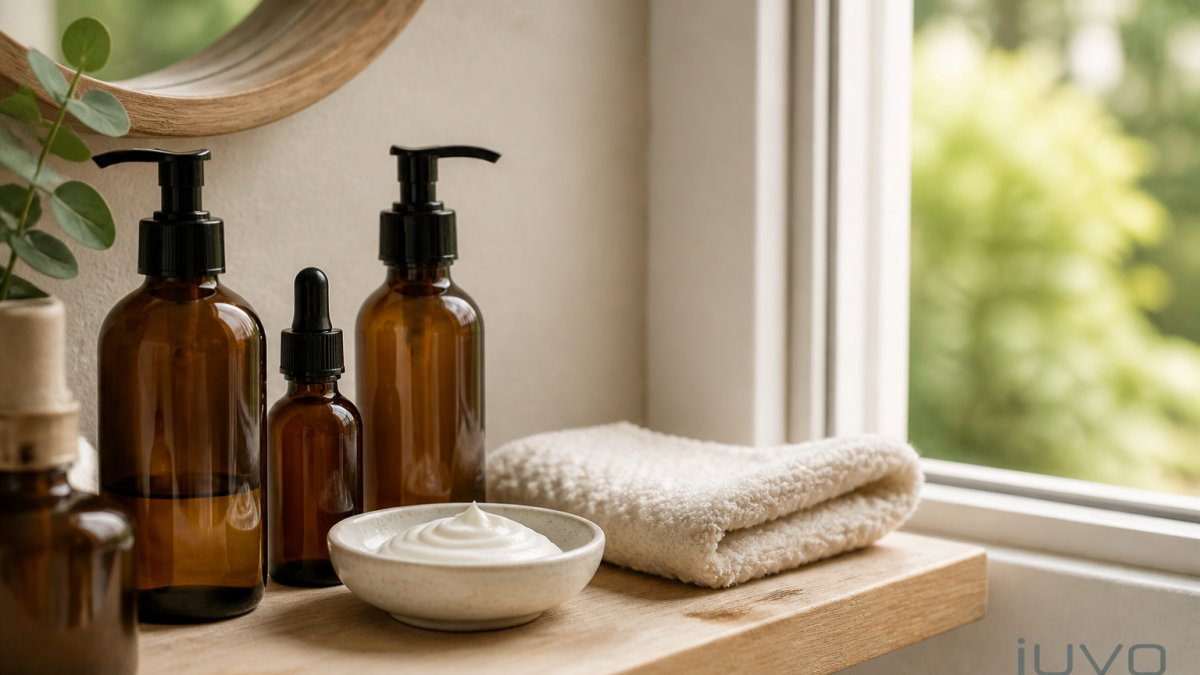
Map your current routine to these equivalents:
- Cream or gel cleanser → Gentle Facial Cleansing Lotion, £8.00
- Balancing toner → Balancing Toner with White Lotus, £8.00
- Day or night moisturiser → Nourishing Day & Night Cream, £34.00
- Facial oil or serum → Rosehip, Grapeseed & Jojoba Face & Body Oil, £24.00
- Clay mask → Gentle Vitamin Face Mask, £9.00
- Body moisturiser → Deep Hydrating Unscented Face & Body Butter, £9.00
The shampoo bar at £8.00 covers hair if you are moving your whole routine across, and the essential oil soaps at £4.00 replace bar soap without the drying effect.
What most guides miss is that texture matters as much as ingredients. If you are used to a lightweight lotion, a rich butter will feel wrong for the first fortnight even if it suits your skin. Give any new texture two weeks before you judge it.
What to Check Before You Switch Brands
Before you switch, read the full ingredient list on the product page, not the front of the bottle. Check for your known triggers, confirm the certifications, and compare the price per millilitre rather than the headline price.
A practical checklist:
- Full INCI ingredient list published on the product page
- Vegan certification from a named body, not a self-declared claim
- Cruelty-free statement covering the whole supply chain
- No fragrance or essential oils if your skin is reactive
- Price per 100ml, so you compare like with like
- Clear guidance on which skin types the product suits
- A returns or sample option so you can test before committing
The UK Cosmetics Regulation guidance from the Office for Product Safety and Standards sets out what cosmetic labels must legally declare, which is useful when you are checking whether a brand is being straight with you. Anything beyond that, such as "natural" or "clean", is marketing language rather than a regulated term.
Batch-to-batch consistency is the other thing to ask about with handmade brands. A family-run maker should be able to explain how it standardises each batch. If a company cannot answer that question clearly, that tells you something.
Common Mistakes When Choosing Alternatives
The most common mistake is choosing on price alone. A £6 cleanser that irritates your skin costs more than an £8 one that does not, once you factor in the replacements and the discomfort.
Other traps to avoid:
- Buying a full routine from one brand on day one. You lose the ability to identify what works.
- Assuming "organic" means "gentle". Essential oils can be certified organic and still trigger reactions.
- Ignoring the preservative system. Preservatives prevent mould and bacteria, and a poorly preserved "preservative-free" product is a bigger risk than a well-formulated one.
- Trusting awards as proof of suitability. An award means a product performed well in testing, not that it suits your skin.
- Overlooking packaging. Low-waste refills and recyclable containers matter if sustainability is part of why you are switching.
According to NHS guidance on eczema and sensitive skin, keeping a consistent, fragrance-free routine is one of the most effective ways to reduce flare-ups, which is why unscented options deserve a place in any sensitive-skin routine.
Conclusion: Which Alternative Fits Your Skin and Budget
Choosing between the best Nourish London alternatives comes down to three questions: what does your skin react to, what certifications do you require, and what can you spend on a full routine each month?
For most sensitive-skin shoppers, the answer is a small, transparent range with unscented options and named certifications. Iuvo Skincare covers that ground: a family-run maker with vegan certification, handmade products free from parabens, sulphates and palm oil, and a full face, body and hair routine that stays under £75. The award-winning Rosehip, Grapeseed & Jojoba Face & Body Oil at £24.00 and the Deep Hydrating Unscented Butter at £9.00 are the two products most people start with, and both are gentle enough for reactive skin.
Start with one product, test it for a fortnight, and build from there. Search our store to find the routine that fits your skin and your budget.
Frequently Asked Questions
What are the best alternatives to Nourish London skincare?
Look for brands that match the same priorities: gentle plant-based formulas, clear ingredient lists and no parabens or sulphates. Iuvo Skincare is a family-run option whose range is vegan certified and handmade, with a gentle cleansing lotion at £8, a balancing toner at £8 and a nourishing day and night cream at £34. The right choice depends on your skin type and how much you want to spend on a full routine.
Are there affordable alternatives to Nourish London?
Yes. A complete routine does not have to cost much. Iuvo Skincare's gentle facial cleansing lotion and balancing toner are both £8, the clay face mask is £9, the deep hydrating face and body butter is £9 and the handmade essential oil soaps are £4. Cleanser, toner, mask and moisturiser together come to under £60, which leaves room to add the face and body oil at £24 later.
Which vegan skincare brands offer natural ingredients?
Check for a certification rather than a claim on the label. Iuvo Skincare's range is 100% vegan certified and cruelty-free, handmade in small batches and free from palm oil, sulphates, SLS and parabens. Its nourishing day and night cream is made with organic unrefined shea butter, aloe vera, rose geranium and rose water, and 98.9% of its total ingredients are from natural origin.
How do I choose a natural skincare brand for sensitive skin?
Start with the shortest, plainest ingredient list you can find, then patch test on your inner forearm for a few days before using it on your face. Fragrance-free and unscented options reduce the number of possible triggers, so the unscented face and body butter and the unscented face and body oil are sensible starting points. Introduce one new product at a time so you can tell what suits your skin.
Is handmade skincare consistent from batch to batch?
Small-batch makers control consistency through fixed recipes, weighed ingredients and recorded batch dates rather than through large-scale production lines. Ask a brand how it measures and records each batch, how long a product stays fresh after opening, and whether it publishes a full ingredient list. Clear answers on those three points tell you more than a general quality promise.


