
Natural Skincare for Cancer Patients: A Gentle Guide
by Ian Gabbidon on Sep 25, 2026

Table of Contents
- Why Cancer Treatment Changes Your Skin
- What Makes Natural Skincare Different for Cancer Patients
- Avoiding Parabens and Sulphates in Skincare
- Building a Gentle Cleansing Routine
- Moisturising and Barrier Repair with Natural Butters and Oils
- How to Soothe Radiation Burns Naturally
- Managing Hot Flushes and Redness
- Sun Protection for Vulnerable Skin
- The Psychological Impact of Skin Changes
- Budget-Friendly Natural Alternatives
- Men's Skincare During Cancer Treatment
- Patch Testing and Ingredient Safety
- Frequently Asked Questions
Last Updated: September 25, 2026
Why Cancer Treatment Changes Your Skin
Cancer treatment often strips the skin of its natural defences, leaving it dry, reactive and painfully sensitive. This guide from Iuvo Skincare explains what happens at the barrier level and how natural skincare for cancer patients can support skin through chemotherapy and radiation therapy without adding further irritation.
Chemotherapy and radiation therapy do not distinguish between fast-dividing cancer cells and the healthy cells that keep your skin intact. The basal cells that constantly renew your epidermis are among the fastest-dividing cells in the body, which is precisely why they take such a hit during treatment. The result is a compromised skin barrier, the outermost layer that normally locks in hydration and keeps irritants out.
When that barrier weakens, moisture escapes and external triggers get in. Skin becomes dry, itchy, red and slow to heal. Understanding this process matters because it changes what you should put on your skin. Harsh foaming agents and synthetic fragrance, tolerable on healthy skin, can tip fragile skin into a full flare.
The NHS overview of chemotherapy side effects confirms that skin changes are a recognised and common consequence of treatment. Knowing why they happen is the first step to choosing products that help rather than hinder.
How Chemotherapy Affects Skin Barrier Function
Chemotherapy reduces the skin's ability to retain water and repair itself. The lipid matrix between skin cells, made largely of ceramides and natural oils, becomes depleted, so the barrier lets moisture out and irritants in. Many patients notice pronounced dryness, flaking, itching and a stinging sensation even from products they have used for years.
This is where skin barrier function becomes the central concern. A barrier that cannot hold water also cannot keep out bacteria or environmental triggers, which raises the risk of infection and irritation. Hydration becomes a medical priority, not a cosmetic one.
The practical response is to favour gentle, fragrance-free formulas rich in emollients and occlusives that mimic the skin's own lipids. Heavy foaming cleansers and alcohol-based toners work against you here. So does anything with synthetic fragrance, which is one of the most common triggers of contact irritation on compromised skin.
Radiation Therapy and Localised Skin Reactions
Radiation therapy causes reactions confined to the treated area, and they tend to build gradually. Skin may redden, feel warm and tight, then peel or blister as treatment progresses, a pattern clinicians often describe in stages similar to sunburn. The treated field needs its own careful routine, separate from the rest of your body.
Reactions usually peak toward the end of a course and settle in the weeks after. During that window, the priority is protection: keep the area clean, moisturised and covered, and avoid friction from tight clothing or harsh fabrics.
Never apply anything to a radiation field without checking with your clinical team first. Some ingredients and even some natural oils are not appropriate on irradiated skin, and your radiographer can tell you what is safe for your specific treatment area.
What Makes Natural Skincare Different for Cancer Patients
Natural skincare for cancer patients is not simply "chemical-free" marketing. It is a deliberate shift toward short ingredient lists, plant-based emollients and the absence of the synthetic additives most likely to irritate fragile skin. The distinction that matters is not natural versus synthetic in the abstract, but which specific ingredients calm reactive skin and which provoke it.
A well-formulated natural product earns its place through what it leaves out as much as what it includes. Free from parabens, sulphates, palm oil and synthetic fragrance, a good formula relies on raw butters, carrier oils and botanical extracts to do the work.
That said, "natural" is not automatically safe. Essential oils, though plant-derived, are among the most common causes of allergic contact dermatitis. This is why unscented options matter so much during treatment, and why patch testing is non-negotiable.
Avoiding Parabens and Sulphates in Skincare
Parabens and sulphates are two additive groups worth removing from a treatment-time routine. Sulphates, the foaming agents that make cleansers lather, strip the skin's natural oils and disrupt an already weakened barrier. Parabens are preservatives that some people choose to avoid on principle, and for anyone rebuilding a gentle routine, a shorter, cleaner ingredient list is easier to manage.
The practical test is simple: read the label. Sulphates usually appear as sodium lauryl sulphate or sodium laureth sulphate. Parabens end in "-paraben," such as methylparaben or propylparaben.
Switching away from these is one of the easiest wins in a sensitive-skin routine. A gentle, low-foaming cleanser does the job without the tight, squeaky feeling that signals stripped skin. If a product leaves your face feeling taut after washing, it is too harsh for treatment-compromised skin.
Building a Gentle Cleansing Routine
A gentle cleansing routine is the foundation of natural skincare for cancer patients: cleanse twice daily with a low-foaming, fragrance-free wash, using lukewarm water and your fingertips, then pat dry and moisturise within a minute while skin is still damp. The goal is to remove debris without disturbing the barrier you are trying to protect.
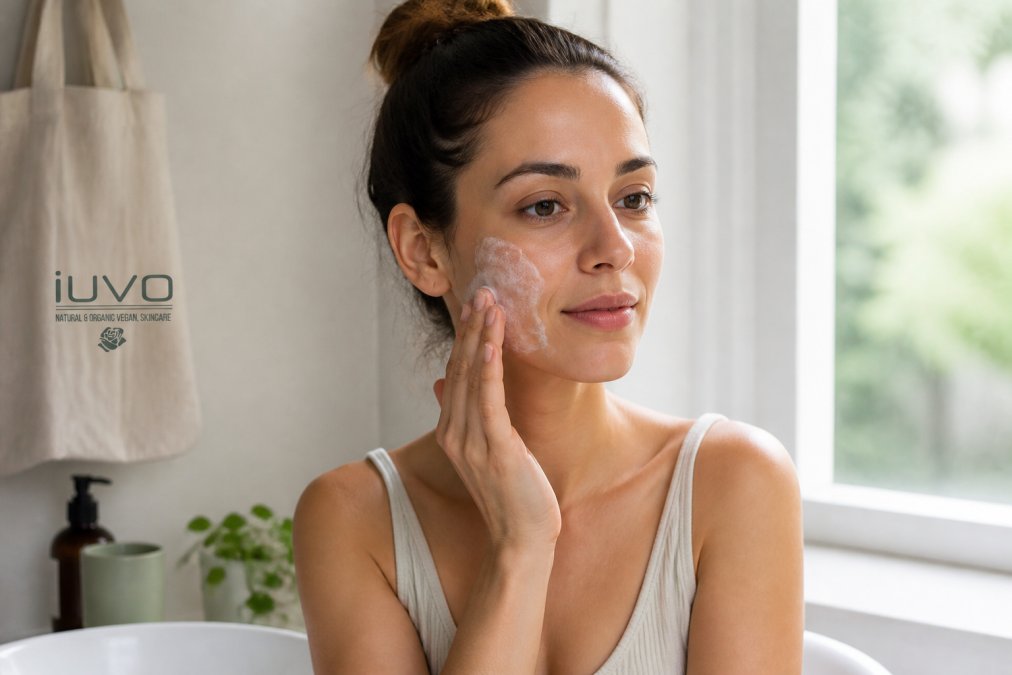
Follow these steps for a routine that respects fragile skin:
- Wet your face with lukewarm water. Hot water strips oils and worsens dryness.
- Apply a small amount of gentle cleanser to your fingertips, not a cloth or sponge.
- Massage in slow circles for around 30 seconds. No scrubbing, no exfoliating beads.
- Rinse thoroughly and pat, never rub, dry with a soft clean towel.
- Moisturise immediately, while the skin is still slightly damp, to lock in hydration.
Skip exfoliants, facial brushes and anything abrasive entirely during treatment. Your skin is renewing itself under strain already; it does not need help shedding.
Choosing a Sensitive Face Wash
The best face wash for treatment-compromised skin is a low-foaming, unscented formula built around soothing botanicals rather than active exfoliants. Look for a short ingredient list, no sulphates and no synthetic fragrance. A product designed for sensitive, eczema and psoriasis-prone skin is a sensible starting point.
Iuvo Skincare's Sensitive Face Wash with Rose Geranium is formulated to soothe and calm sensitive skin while removing debris and purifying the skin, leaving it moisturised and refreshed rather than tight. At £8.00 for 150ml, it is a low-risk way to test how your skin responds before committing to a full routine.

A common mistake is over-cleansing. Twice a day is plenty. If your skin feels clean but comfortable, you have got it right. If it feels tight or stings, step back to once daily and reassess.
Moisturising and Barrier Repair with Natural Butters and Oils
Moisturising is where barrier repair actually happens. Natural butters and carrier oils replenish the lipids that treatment depletes, sealing in hydration and giving the skin the raw material it needs to rebuild. This is the single most important step in any routine for vulnerable skin, and it is worth doing generously and often.
Look for formulas built on shea or similar raw butters combined with carrier oils. Coconut oil soothes, jojoba oil helps prevent itching, and rosehip oil is valued for its role in scarring. These are the workhorses of a restorative routine, not the trendy actives.
Soothing Unscented Face & Body Soaps →
Iuvo Skincare's NOURISH Deep Hydrating Unscented Face & Body Butter is built around exactly this approach, combining coconut, jojoba, rosehip and neem oils in an unscented base suitable for face and body. At £9.00, it is designed for gentle, ongoing hydration rather than a quick fix. Apply it while skin is damp, and reapply to dry patches as often as needed through the day.

How to Soothe Radiation Burns Naturally
To soothe radiation burns naturally, keep the treated area clean, moisturised and protected, and avoid anything that stings, fragrances or exfoliates. Gentle, unscented emollients help calm the skin and reduce tightness. Always clear any product with your radiographer before applying it to a radiation field, because the rules for irradiated skin are stricter than for the rest of your body.
A few principles hold true across most radiation skincare guidance:
- Use lukewarm water and a mild, unscented cleanser on the treated area.
- Pat dry gently; never rub the treated skin.
- Moisturise regularly with a simple, fragrance-free product.
- Wear soft, loose clothing over the area to reduce friction.
- Protect the area from sun with clothing and, where appropriate, sunscreen.
Avoid heat, ice packs and topical products containing alcohol, fragrance or essential oils on the treated field unless your clinical team says otherwise. The Cancer Research UK guidance on skin changes during treatment is a reliable starting point for what to expect and when to seek advice.
Managing Hot Flushes and Redness
Hot flushes and redness are common during treatment, particularly with hormone therapies, and they can make skin feel flushed, warm and reactive. Cooling the skin and avoiding triggers helps, but so does simplifying what you apply. The more products on reactive skin, the harder it is to identify what is causing a flare.
Keep a small kit of unscented essentials and stick to it. A gentle cleanser, a hydrating butter and a mineral sunscreen cover most needs. When skin is red and warm, resist the urge to layer on treatments; fewer products, applied consistently, usually calm things faster.
Redness that comes with swelling, blistering, oozing or pain is not something to manage at home. Contact your clinical team, because those signs need proper assessment.
Sun Protection for Vulnerable Skin
Sun protection is non-negotiable for skin compromised by treatment. Chemotherapy and radiation can make skin far more sensitive to ultraviolet light, and some medications cause photosensitivity that persists for weeks after treatment ends. A sunburn on vulnerable skin is more damaging and slower to heal than on healthy skin.
Choose a broad-spectrum sunscreen with a high sun protection factor, and favour mineral filters such as zinc oxide or titanium dioxide, which tend to suit reactive skin better than chemical filters. Apply it generously, reapply every couple of hours outdoors, and back it up with a hat and loose clothing.
For the radiation field, confirm with your team before applying any sunscreen, and cover the area with clothing where you can. Shade and physical barriers are the most reliable protection of all.
The Psychological Impact of Skin Changes
Skin changes during cancer treatment carry a psychological weight that is rarely discussed in skincare guides. Hair loss, rashes, discolouration, dry flaking and scarring affect how people see themselves at a moment when they already feel stripped of control. That is not vanity; it is a real and documented part of the treatment experience, and it deserves the same attention as the physical symptoms.
A common pattern is that visible skin changes arrive at the same time as fatigue, altered body image and a loss of routine, so the mirror becomes a daily reminder of illness rather than of self. For some people this shows up as avoidance (skipping mirrors, covering up, cancelling social plans); for others it shows up as frustration and low mood. Neither response is a character flaw, and neither needs to be managed alone.
A simple, nurturing routine can help restore a sense of agency. Choosing what goes on your skin, and doing it gently and deliberately, is a small act of care in a period when so much feels out of your hands. Many patients find that a consistent routine provides comfort and a sense of normalcy. The practical version of that looks like:
- Keep it short and repeatable. A three-step routine (cleanse, moisturise, protect) is easier to sustain on low-energy days than a ten-step one, and consistency itself is soothing.
- Anchor it to an existing habit. Pairing skincare with brushing teeth or getting dressed makes it automatic rather than another decision to make.
- Involve touch deliberately. Applying moisturiser slowly and gently is a form of self-contact that many people find calming, not just cosmetic.
- Lower the bar on bad days. Cleansing with lukewarm water and applying one unscented moisturiser is a complete routine when energy is low.
- Notice what helps, not just what looks better. Comfort, reduced stinging and less tightness are valid wins even before visible improvement.
If skin changes are affecting your mood, confidence or willingness to be seen, tell your clinical team.
Budget-Friendly Natural Alternatives
A supportive natural routine does not have to be expensive. The most effective products for compromised skin are often the simplest: a gentle cleanser, a rich unscented moisturiser and a mineral sunscreen. You can build a full routine for well under the cost of a single luxury serum.
| Product | Price | Best For | Key Ingredients |
|---|---|---|---|
| Soothing Unscented Face & Body Soap | £4.00 | Very sensitive, reactive skin | Unscented, no essential oils |
| Sensitive Face Wash (Rose Geranium) | £8.00 | Daily gentle cleansing | Rose Geranium |
| NOURISH Deep Hydrating Butter | £9.00 | Barrier repair, dry patches | Coconut, jojoba, rosehip, neem |
| Unscented Antiperspirant Deodorant | £12.00 | Sensitive underarms | Aluminium-free, unscented |
Men's Skincare During Cancer Treatment
Men going through treatment face the same barrier damage but often with less guidance. Skincare is still marketed heavily toward women, so many men either skip it entirely or reach for whatever is in the bathroom cabinet, which is frequently a harsh, heavily fragranced product designed for oily skin.
Patch Testing and Ingredient Safety
Patch testing is the single most useful habit for anyone with vulnerable skin, and it takes minutes. Apply a small amount of any new product to a discreet area, such as the inner forearm, cover it lightly and wait 24 to 48 hours. If redness, itching or stinging develops, do not use it on your face or body. Repeat the test on any skin that will sit inside a radiation field only after your radiographer has cleared the product.
| Natural ingredient | Generally considered | Watch out for |
|---|---|---|
| Shea butter, cocoa butter | Safe for most, rich emollient | Heavy occlusion on a moist, weeping radiation field |
| Jojoba oil, rosehip oil | Safe for most, supports barrier repair | Seed/nut cross-reactivity in known allergy |
| Coconut oil | Safe for most | Comedogenic on some facial skin; check with team on irradiated areas |
| Oat, calendula, chamomile | Commonly used for soothing | Rare contact allergy; patch test first |
| Aloe vera | Soothing, cooling | Some products contain alcohol or fragrance, read the label |
| Tea tree, lavender, citrus, peppermint essential oils | Avoid during treatment | High rates of allergic contact dermatitis; citrus and bergamot are also phototoxic |
| Retinol, AHAs, BHAs, vitamin C serums | Avoid during treatment | Increase photosensitivity and irritate compromised skin |
| Alcohol-based toners, astringents | Avoid | Strip the barrier and sting on reactive skin |
A short checklist for any new product:
- Ingredient list is short and readable
- No sulphates (SLS, SLES)
- No parabens
- No synthetic fragrance or essential oils, unless cleared by your team
- No retinol, AHAs, BHAs or high-strength vitamin C during treatment
- Patch tested for 24 to 48 hours
- Cleared with your clinical team if it will touch a radiation field
Frequently Asked Questions
What ingredients should cancer patients avoid in skincare products?
Cancer patients should avoid parabens, sulphates (like SLS), synthetic fragrances, and artificial colours. These can irritate sensitive skin and disrupt the skin barrier. Look for fragrance-free, hypoallergenic products with natural ingredients like ceramides and botanical extracts. Always check labels for hidden irritants and patch test new products on a small area first.
Why does chemotherapy cause skin sensitivity?
Chemotherapy targets fast-growing cells, which can include skin cells. This weakens the skin barrier function, leading to dryness, redness, and irritation. The skin becomes more vulnerable to external stressors, so gentle, natural skincare is essential to support recovery and maintain skin integrity during treatment.
Are organic skincare products safer for oncology patients?
Organic products often avoid harsh chemicals like parabens and sulphates, making them gentler on sensitive skin. However, 'organic' doesn't automatically mean safe for everyone. Always choose fragrance-free, hypoallergenic options and consult your healthcare team. Patch testing is crucial to ensure no adverse reactions.
How can I manage dry, itchy skin during cancer treatment?
Use a deep hydrating, unscented moisturiser with natural butters and oils like coconut, jojoba, and rosehip. These ingredients soothe and repair the skin barrier. Apply immediately after bathing to lock in moisture. Avoid hot showers and harsh soaps. If itching persists, speak to your oncology team.
What are the benefits of using fragrance-free skincare during treatment?
Fragrance-free products reduce the risk of allergic reactions and irritation, which is vital when your skin is already sensitive from chemotherapy or radiation. They support the skin's natural barrier without adding unnecessary stressors, helping to prevent redness, itching, and discomfort. Look for unscented formulas that rely on botanical extracts for soothing benefits.
How do I patch test new skincare products safely?
Apply a small amount of the product to your inner forearm or behind your ear. Wait 24-48 hours. If you notice redness, itching, or burning, do not use it. If no reaction occurs, you can try it on a larger area. Always patch test before introducing any new product, especially during cancer treatment when skin is highly reactive.


