

Table of Contents
- Why Palm Oil Free Moisturizer Is Worth Switching To
- Quick Comparison: 7 Palm Oil Free Moisturizers at a Glance
- 1. Nourishing Day & Night Cream, 100ml: Best Overall Face Moisturizer
- 2. Deep Hydrating Unscented Face & Body Butter: Best for Eczema-Prone Skin
- 3. Deep Hydrating Scented Face & Body Butter: Best Scented Option
- 4. Rosehip, Grapeseed & Jojoba Face & Body Oil, 100ml: Best for Dry, Mature Skin
- 5. Rosehip, Grapeseed & Jojoba Face & Body Oil, 30ml: Best Travel Size
- 6. Butter Cream with Scoop, 100ml: Best Budget Face Cream
- 7. Jamaican Black Castor Oil, 50ml: Best Multi-Tasker for Hair, Brows and Body
- Hidden Names for Palm Oil in Cosmetics: What to Look For on the INCI List
- Frequently Asked Questions
Last Updated: October 2, 2026
Why Palm Oil Free Moisturizer Is Worth Switching To
A palm oil free moisturizer is a skincare product formulated without palm oil or any of its derivatives, and demand for these formulas has grown sharply as shoppers connect everyday purchases to deforestation and habitat loss. This guide from Iuvo Skincare walks through seven vegan picks, what they cost, and how to read a label properly.
The case for switching rests on two separate arguments, and it helps to keep them apart. One is environmental. The other is dermatological. Most roundups blur the two, which is why so many readers finish an article on palm-free skincare still unsure whether it actually matters for their skin.
Below, we break down both arguments, then compare seven products side by side so you can match a formula to your skin type rather than guess.
The Environmental Case: Deforestation, Habitats and Orangutan Conservation
Palm oil production is linked to tropical deforestation, biodiversity loss and the destruction of habitats that orangutan conservation efforts depend on (8 things to know about palm oil). That link is well documented, and it is the main reason ethically conscious buyers look for palm-free formulas.
Sustainable sourcing schemes exist, and certified sustainable palm oil does reduce some harm compared with conventional supply chains. But certification is not the same as elimination. If your reason for avoiding palm oil is that you do not want to fund the expansion of plantations at all, then palm oil free skincare is the only option that fully answers the question.
The practical snag is that palm oil hides. It rarely appears under that name on a label, and a product marketed as "natural" can still contain three or four derivatives. That is where most well-meaning purchases fall down, and it is why we spend a full section on the INCI list further down.
The Skin Case: Why Sensitive Skin Often Prefers Palm-Free Formulas
Palm oil is not inherently bad for skin. The honest position is that many people use it with no reaction at all. So why do so many sensitive-skin sufferers report improvements after switching?
Two reasons hold up. First, palm-derived emollients and occlusives are often paired with other synthetic ingredients in mass-market formulas, so removing palm oil frequently means removing a whole cluster of additives at the same time. Second, people who seek out palm-free products tend to buy from smaller makers using shorter ingredient lists, and a shorter list means fewer things that can trigger a flare.
If your skin is reactive, the ingredient list length usually matters more than any single ingredient. A formula with eight recognisable components is easier to troubleshoot than one with thirty.
Quick Comparison: 7 Palm Oil Free Moisturizers at a Glance
Every product below is vegan certified, cruelty-free and free from palm oil, SLS, sulphates and parabens. All seven come from Iuvo Skincare's handmade range, which is family-run and made in small batches.
| Product | Size | Price | Best For | Format |
|---|---|---|---|---|
| Nourishing Day & Night Cream | 100ml | £34.00 | Best overall face moisturizer | Rich cream |
| Deep Hydrating Unscented Butter | 100ml | £9.00 | Eczema-prone skin | Body butter |
| Deep Hydrating Scented Butter | 100ml | £9.00 | Scented option | Body butter |
| Rosehip, Grapeseed & Jojoba Oil | 100ml | £24.00 | Dry, mature skin | Face and body oil |
| Rosehip, Grapeseed & Jojoba Oil | 30ml | £9.00 | Travel size | Face and body oil |
| Butter Cream with Scoop | 100ml | £20.00 | Budget face cream | Cream |
| Jamaican Black Castor Oil | 50ml | £15.00 | Hair, brows and body | Single-ingredient oil |
A full routine built around the cheapest cream, butter and travel oil comes to £38.

1. Nourishing Day & Night Cream, 100ml: Best Overall Face Moisturizer
Our top pick for most people is the Nourishing Day & Night Cream at £34.00 for 100ml. It uses organic unrefined shea butter, aloe vera, rose geranium and rose water, and it is light enough to wear under makeup in the morning and rich enough to use at night.
The numbers on the label are unusually specific, which we like. 64.6% of the total ingredients are from organic farming, and 98.9% are from natural origin. That level of disclosure is rare, and it makes the organic certification claim checkable rather than decorative.
What works: It absorbs without leaving a greasy film, which is the usual failure point for shea-based creams. The rose geranium gives a soft scent without added fragrance.
What doesn't: At £34.00 it is the priciest item here, and anyone who dislikes floral notes will find the rose water noticeable. If you want a completely unscented face cream, look at the butter range instead.

2. Deep Hydrating Unscented Face & Body Butter: Best for Eczema-Prone Skin
Fragrance-free formulas are the safer bet for eczema-prone skin, and this Deep Hydrating Unscented Face & Body Butter at £9.00 is the one we would hand to someone mid-flare. There is no added essential oil anywhere in it.
The carrier oil blend is chosen with reactive skin in mind. Coconut oil soothes, jojoba oil helps to prevent itching, rosehip oil is great for scarring, and neem oil assists in pain relief.
One warning before you buy: neem has a strong nutty smell. It is unscented in the sense that no fragrance has been added, not in the sense that it smells of nothing. Some people love it, some do not.
3. Deep Hydrating Scented Face & Body Butter: Best Scented Option
The scented version of the same butter costs the same £9.00 and swaps the plain base for a blend of complementary essential oils. It carries coconut, jojoba and rosehip oils, so the skin benefits are identical to the unscented tub.
Choose this one if you want your moisturiser to double as a moment of calm. Choose the unscented version if your skin has ever reacted to a product you could smell. That is the whole decision, and it comes down to how reactive your skin is rather than which one performs better.
The texture is a true butter, so it is thicker than a lotion. Warm a small amount between your palms before applying and it spreads considerably further.
4. Rosehip, Grapeseed & Jojoba Face & Body Oil, 100ml: Best for Dry, Mature Skin
For dry or mature skin, a facial oil often does more than a cream, and this Rosehip, Grapeseed & Jojoba Face & Body Oil at £24.00 for 100ml is the strongest performer in the range. Grapeseed oil is light and easily absorbed, jojoba oil closely resembles the skin's own sebum, and rosehip oil is rich in vitamins A and C.

Rosehip oil, rich in vitamins A and C, promotes skin regeneration, helps improve texture, and supports a youthful appearance.
Our Body Oil is not only an excellent moisturiser but also makes for a delightful massaging oil. The carefully selected essential oil blends add a touch of aromatic indulgence and provide additional therapeutic properties. Whether you choose the calming and balancing blend, the invigorating and uplifting blend, or the soothing and relaxing blend, each variation offers its own unique benefits for your well-being.
Nourishing Day & Night Cream | 100ml →
The drawback: oils are not for everyone. If you are prone to congestion, start with two drops at night rather than a full pump.
5. Rosehip, Grapeseed & Jojoba Face & Body Oil, 30ml: Best Travel Size
The 30ml version of the same oil costs £9.00 and is the cheapest way to test whether an oil suits your skin before committing to the full bottle. Same three carrier oils, same essential oil blends, cabin-friendly size.
We would point anyone new to facial oils here first. Spending £9.00 to find out that oils break you out is a far better outcome than spending £24.00 on the same discovery.
It also solves the regional availability problem. If you travel often, or you are buying for someone who does, a 30ml bottle fits a wash bag without taking up the space a 100ml pump demands.
6. Butter Cream with Scoop, 100ml: Best Budget Face Cream
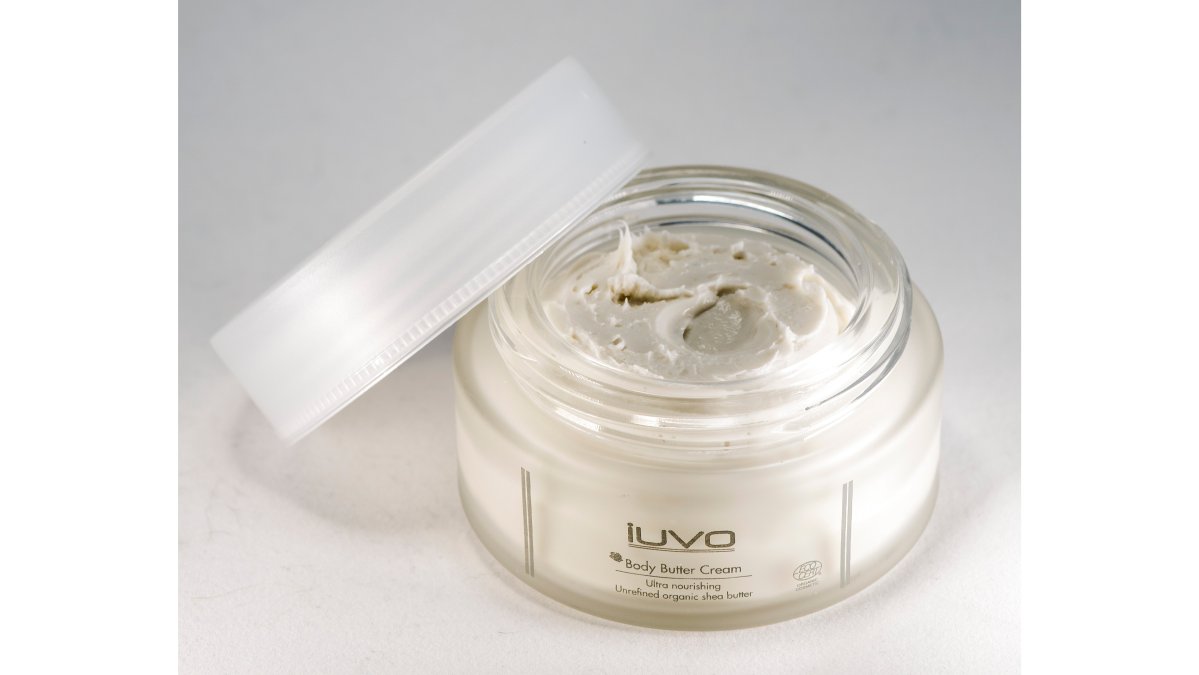
At £20.00, this Butter Cream with Scoop delivers the same core formula as our top pick for £14.00 less. Organic unrefined shea butter, aloe vera, rose geranium and rose water, with the same 64.6% organic and 98.9% natural origin figures.
The trade-off is packaging, and we would rather be upfront about it. Some of the pumps on this product are faulty. The manufacturer has accepted fault and now ships additional scoops with orders so you can extract the cream while the formulation is repacked into the original packaging.
If you can live with a scoop instead of a pump, this is the best value face cream in the range by a clear margin.
7. Jamaican Black Castor Oil, 50ml: Best Multi-Tasker for Hair, Brows and Body
Single-ingredient products are the easiest to verify, and Jamaican Black Castor Oil at £15.00 for 50ml is exactly that. One ingredient, no derivatives to decode, nothing hidden on the INCI list.
It is rich in natural fatty acids, so it hydrates hair and skin and helps lock in moisture. Known to support healthy hair growth, it helps strengthen strands, reduce breakage, and promote thicker, fuller-looking hair. Gentle yet powerful, it soothes dry, irritated skin while restoring balance to the scalp.
The multi-tasking angle is real rather than marketing. People use it on hair, skin, brows, lashes and beards. If you want one bottle to cover several jobs, this is the pick.
The catch: castor oil is thick. A little goes a long way, and applying too much to the scalp leaves hair looking oily for a day.
Hidden Names for Palm Oil in Cosmetics: What to Look For on the INCI List
Palm oil almost never appears on a label as "palm oil." It appears as a derivative, and there are dozens of them. Learning to spot them is the single most useful skill in palm oil free skincare, and it takes about ten minutes to learn.
The INCI list is the standardised ingredient naming system used on cosmetic packaging. Ingredients are listed in descending order of concentration, so anything near the top is present in meaningful amounts.
Here are the names to scan for:
- Elaeis guineensis, the palm species itself, the clearest giveaway
- Sodium lauryl sulfate and sodium laureth sulfate, surfactants often palm-derived
- Cetearyl alcohol and cetyl alcohol, fatty alcohols used as emollients
- Stearic acid and palmitic acid, common thickeners
- Glyceryl stearate and polysorbate 20, 60 or 80, emulsifiers
- Sodium palmate and sodium palm kernelate, soap bases
- Vegetable glycerin, frequently palm-sourced unless stated otherwise
None of these names tells you the origin on its own. That is the point. A manufacturer can use a palm-derived cetearyl alcohol or a coconut-derived one and label both identically.
So how do you verify a vegan beauty certification claim rather than take it on trust? Look for a named certifying body on the packaging, not a leaf logo drawn in-house. A genuine certification carries an organisation's name and a certificate number you can check. If a brand claims to be vegan and cruelty-free but cannot name who certified it, treat the claim as marketing.
The same logic applies to "palm oil free." A trustworthy brand will either list the origin of its fatty alcohols or keep the ingredient list short enough that the question does not arise. Short lists are easier to audit, which is why single-ingredient products like castor oil are the safest purchase if you want certainty.
The hard part of buying palm-free skincare is not finding products. It is verifying them, because the derivatives hide behind names most shoppers have never been taught to read. Iuvo Skincare builds its range around short, checkable ingredient lists: 100% vegan certified, cruelty-free, handmade in the UK, and free from palm oil, nuts, SLS, sulphates and parabens. Start with the Nourishing Day & Night Cream if you want one product that does the job, or the 30ml face and body oil at £9.00 if you would rather test the range first. Search our store to see the full collection.
Frequently Asked Questions
Why is palm oil used in moisturizers?
Palm oil and its derivatives work as emollients and occlusives, which means they soften skin and slow water loss by forming a light film on the surface. They also extend a product's shelf life and give creams a smooth, spreadable texture. That combination is cheap and effective, which is why it appears in so many formulas. The trade-off is environmental: palm oil production has been linked to deforestation, biodiversity loss and habitat destruction. Plant-based alternatives such as shea butter, jojoba and rosehip oil deliver similar moisturising results without that footprint.
How can I tell if a moisturizer contains palm oil?
Read the INCI list rather than the front of the label. Palm oil rarely appears under that name. Look for derivatives such as elaeis guineensis, sodium lauryl sulphate, cetearyl alcohol, glyceryl stearate, stearic acid, palmitic acid, isopropyl palmitate, palm kernel oil and vegetable emulsifying wax. If a brand claims to be palm oil free, the ingredient list should back that up. Iuvo Skincare states its range is free from palm oil, SLS, sulphates and parabens, so you can cross-check the label against that claim before buying.
Are there common hidden names for palm oil in skincare?
Yes, and there are dozens. The most frequent are sodium lauryl sulphate, sodium laureth sulphate, cetearyl alcohol, cetyl alcohol, stearic acid, palmitic acid, glyceryl stearate, isopropyl palmitate, palm kernel oil, vegetable glycerin and polysorbates. Some of these can also be made synthetically, so a single ingredient is not always proof. The clearest signal is a brand that publishes a full INCI list and states outright that it is palm oil free, which lets you verify the whole formula rather than guessing at one line.
Is palm oil free skincare better for the environment?
Palm oil free skincare avoids contributing to the demand that drives deforestation, biodiversity loss and habitat destruction in tropical regions. That matters for species such as the orangutan, whose habitat has shrunk as plantations expand. It is not a perfect answer: substitute oils need land too, and a product can be palm free but still use non-recyclable packaging. The strongest environmental choice combines palm-free formulas with eco-friendly packaging and brands that are transparent about sourcing. Certified sustainable palm oil exists, but many conscious consumers prefer to avoid the ingredient altogether.
How do I verify vegan beauty certification in the UK?
Check the logo on the packaging, not just the wording. In the UK, the Vegan Society Trademark and the Vegan Trademark scheme are the recognised certifications, and they require a formal application and audit rather than a self-declared claim. A cruelty-free claim is separate: look for the Leaping Bunny programme, which verifies no animal testing at any stage. If a brand says it is vegan and cruelty-free but shows no certification mark, ask them directly which body certified them. Iuvo Skincare holds vegan certification and is cruelty-free, so the claim is verifiable rather than marketing language.


